

Weekend Preview: The Data Behind The Odyssey’s IMAX Moment
July 16, 2026
This weekend marks the release of one of the most anticipated films of the year, The Odyssey from Christopher Nolan. Although anticipated in cinephile circles, without an established superhero IP or a Barbie boost, The Odyssey must complete a quest of its own to find its broader audience to guarantee success. Heading into the weekend, eyes are on whether it can overtake Nolan’s previous film Oppenheimer and, if so, by how much? The general audience will be the ones to decide the answers to both questions. But what the data can answer is likely the more important question: if Odyssey is going to top Oppenheimer, how?
Like Odysseus himself, The Odyssey began tracking as a force to reckon with, ready and waiting to make the journey in the final weeks and months for a big finale. Although it didn’t launch onto tracking with immediate blockbuster metrics, it did boast notable Awareness and Theatrical Intent six months and six weeks pre-release compared to other Oppenheimer-level performers (Project Hail Mary and Star Wars: The Mandalorian and Grogu).However, the most remarkable feat this far out was its near-perfect levels of Intent Conversion (theatrical intent divided by awareness, with the goal of a 1:1 conversion) of around 1.05 despite a significant early Awareness.. Unlike Oppenheimer or Project Hail Mary, which had to grow awareness to meet their theatrical potential, The Odyssey already possessed that exact audience—aware and ready to see the film in theaters even as far as six months out.
Continuing its journey, The Odyssey successfully retains that same audience and then some by the week of its release. As of opening week, The Odyssey not only maintains similar overall metrics to its Oppenheimer-level comps but in many ways surpasses them (including against Oppenheimer itself). Casting wider beyond this initial net actually sees a more surprising comparison: last year’s mid-July hero-driven blockbuster Superman. With an Interest, Intent, and Willingness to Pay base almost identical to Superman’s at the same time pre-release, The Odyssey sets a wider potential for its performance from sheer momentum and growth alone.

Solidifying this new audience potential, however, requires looking beyond the baseline. Is this hypothetical audience only vaguely interested in the film as premiere day draws closer, or is there true enthusiasm behind the Intent? For The Odyssey, the indicators of enthusiasm-based momentum versus empty calories lies with its top selling point: premium large format (PLF) viewing.
Theatrical Intent encompasses several elements: those that want to see a film in theaters in general, in theaters on opening weekend, or in theaters in premium formats such as IMAX and Dolby (which costs more than a standard ticket). As the first film to be shot entirely with IMAX cameras, The Odyssey definitely has its cinephile fans flocking to the biggest screen possible, but has that marketing angle caught up to the general public?
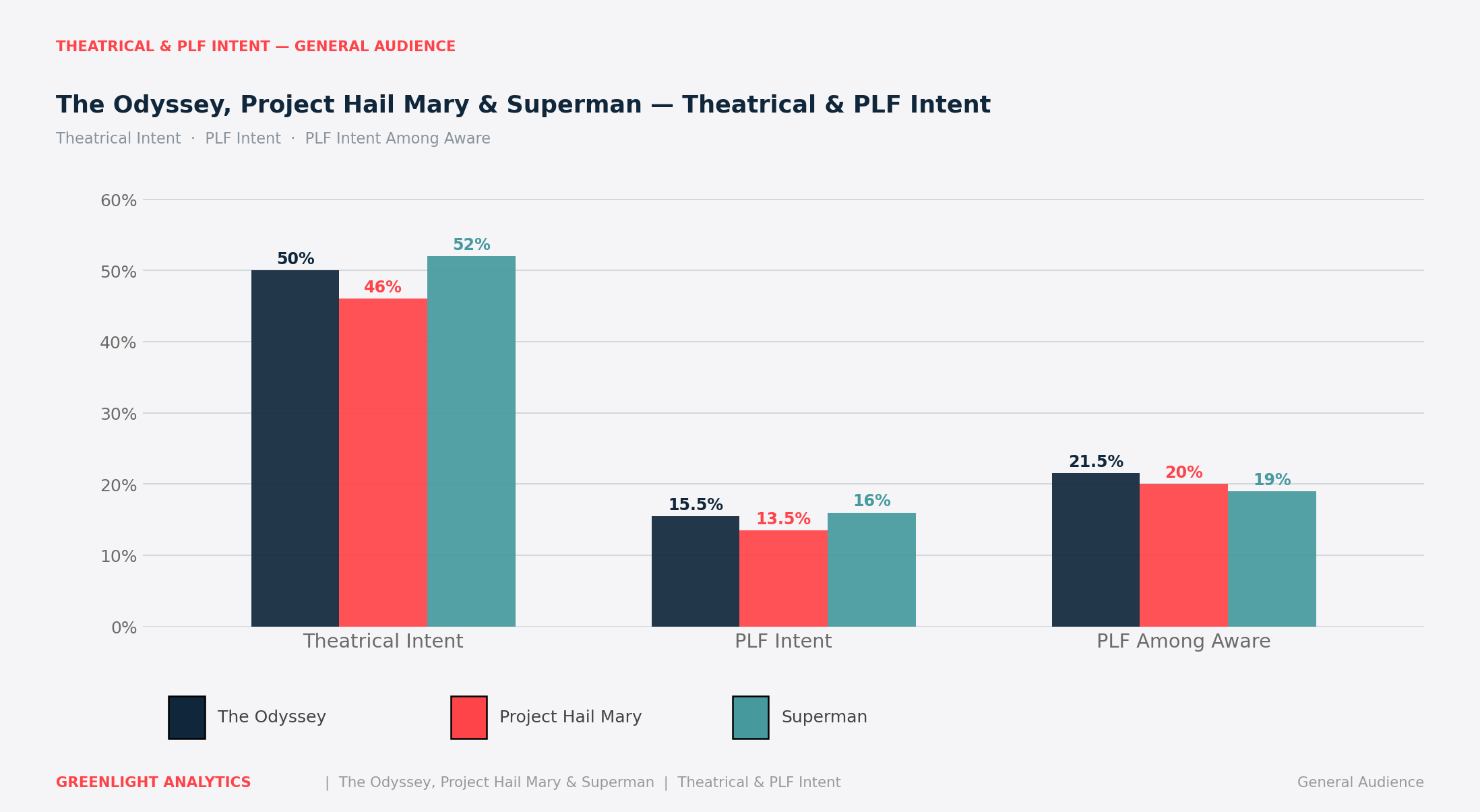
Overall, The Odyssey’s premium format metrics are right in-line with its baseline and its potential. Overall rates of those who want to see the film in premium format match, or are even slightly higher than Project Hail Mary (which earned $28 million from IMAX opening weekend) as well as Superman ($30.4 million).
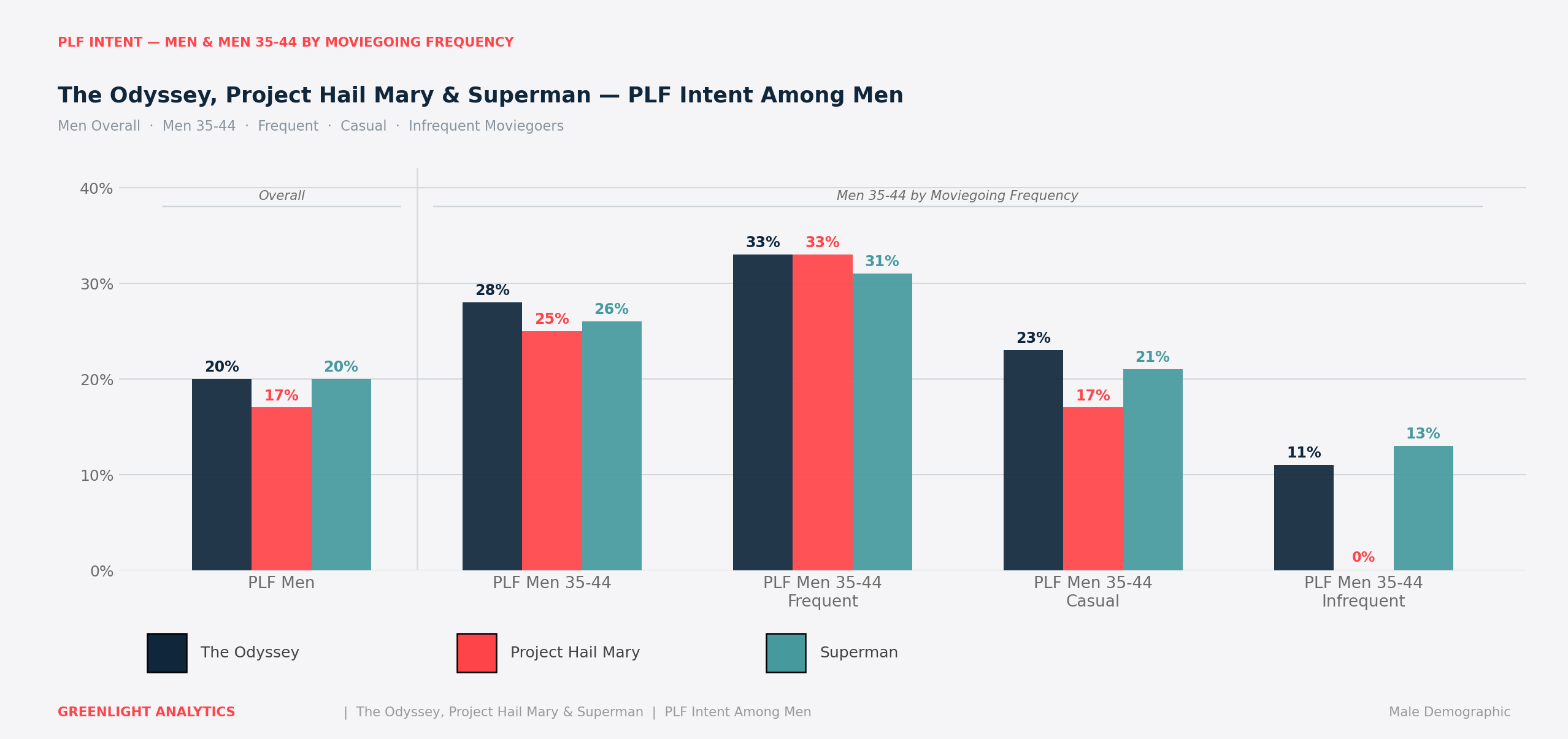
Narrowing in on the target demographics, men 35-44 and women 45-54 (those who had the highest Interest and Intent for The Odyssey), hints at premium format preference. For men 35-44, the rates still closely follow both Project Hail Mary and Superman overall. But, more importantly, among casual and infrequent moviegoers in this demographic, rates of premium format viewing are much closer to Superman than Project Hail Mary, indicating an even broader enthusiasm than Project Hail Mary. Attracting consumers who seldom visit theaters is arguably the most valuable Hollywood superpower.
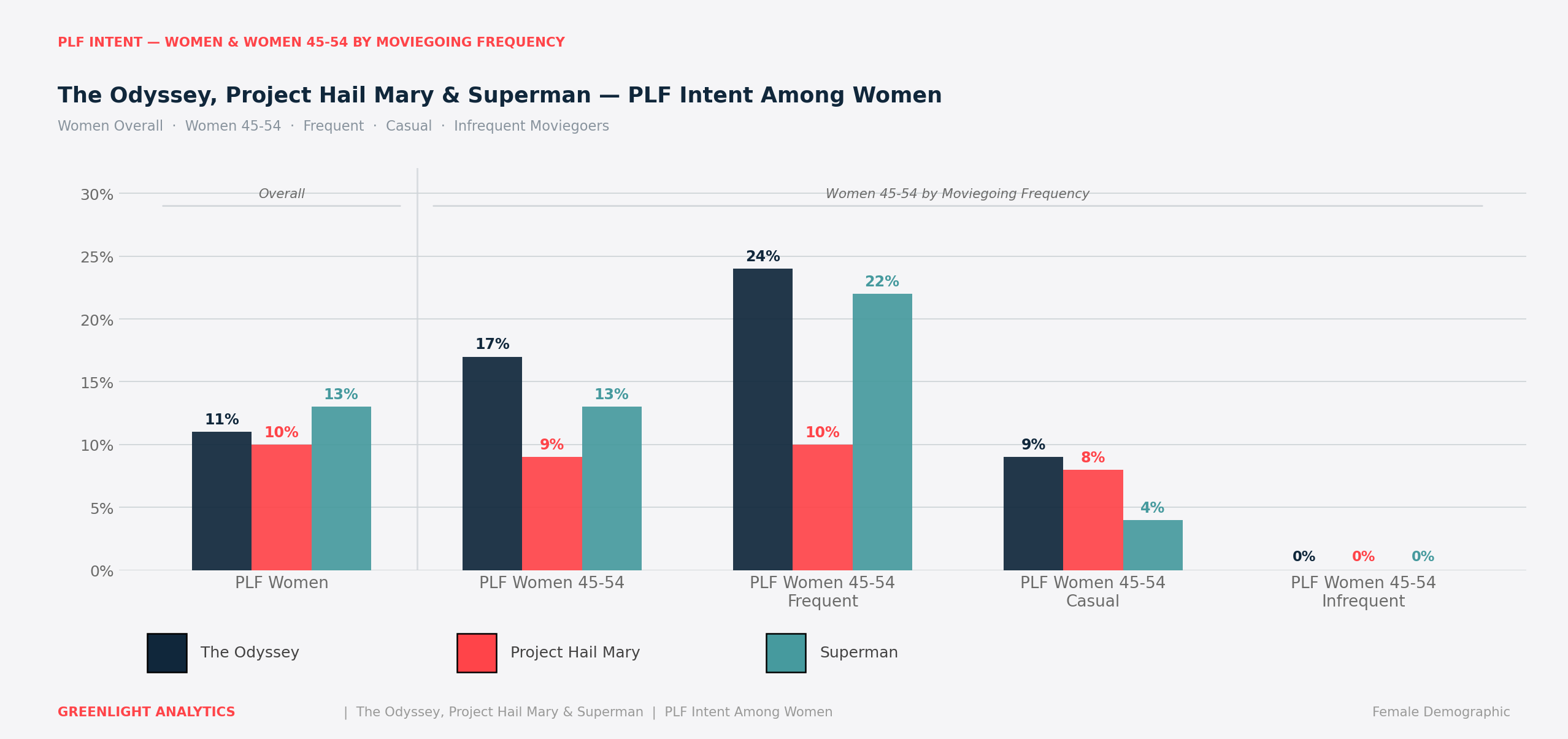
For women 45-54, the gap between The Odyssey and Project Hail Mary in premium format preference becomes more pronounced. Not only do the overall rates in the demographic slightly overtake the rates seen for Superman, but frequent moviegoing women in this group show a whopping 14% more intent to see The Odyssey in premium format over Project Hail Mary. Although a more unconventional film for this demographic, this specific showing of enthusiasm shows a broader appeal for The Odyssey than possibly initially expected compared to the around $80 million openers. It’s also well above Oppenheimer’s resonance with female audiences.
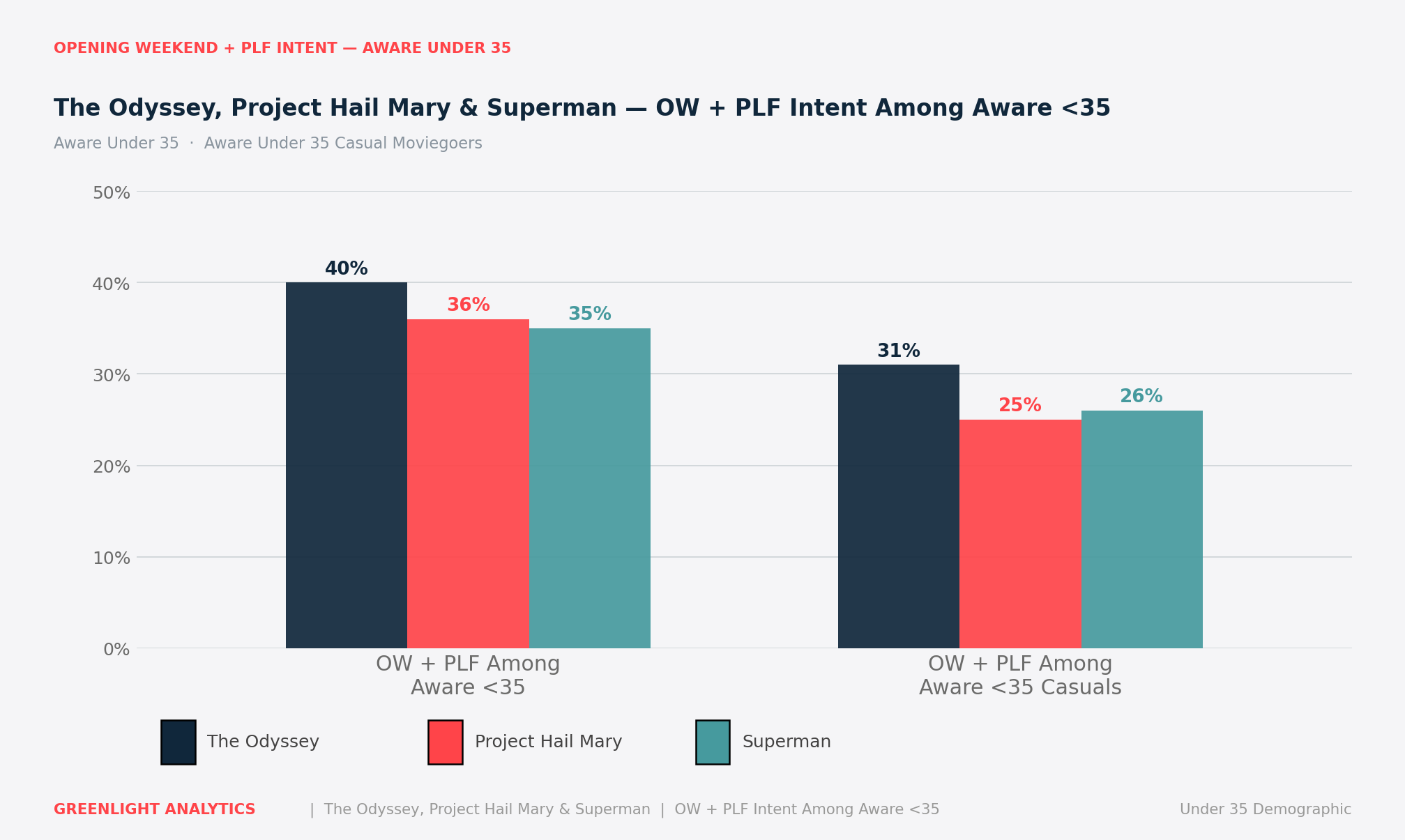
Finally, among the general demographic most enthusiastic about films, audiences under 35, positive premium format enthusiasm shows more upwards momentum for The Odyssey in its final pre-release week. Rates of those under 35 who are aware of the film have similar, even slightly higher, rates of seeing it opening weekend or in premium format. Even more casual moviegoers of this group have even higher enthusiasm, with almost a third of them intending to see The Odyssey opening weekend or in premium format compared to Project Hail Mary’s and Superman’s around 25%.
The Odyssey has what it needs to ride the success of Oppenheimer and ultimately overtake it. From a notable initial interest base to its solid growth, The Odyssey already resembles its target baseline comparative films. However, narrowing in on Intent, especially Intent among its most enthusiastic audience members of a surprisingly broad variety, reveals the truth. The film shows a significant premium format skewing that takes Odysseus possibly beyond the path of an atomic bomb and closer to the path of a Superman.