

The World Cup Is Not the Super Bowl (And That’s the Point)
July 15, 2026
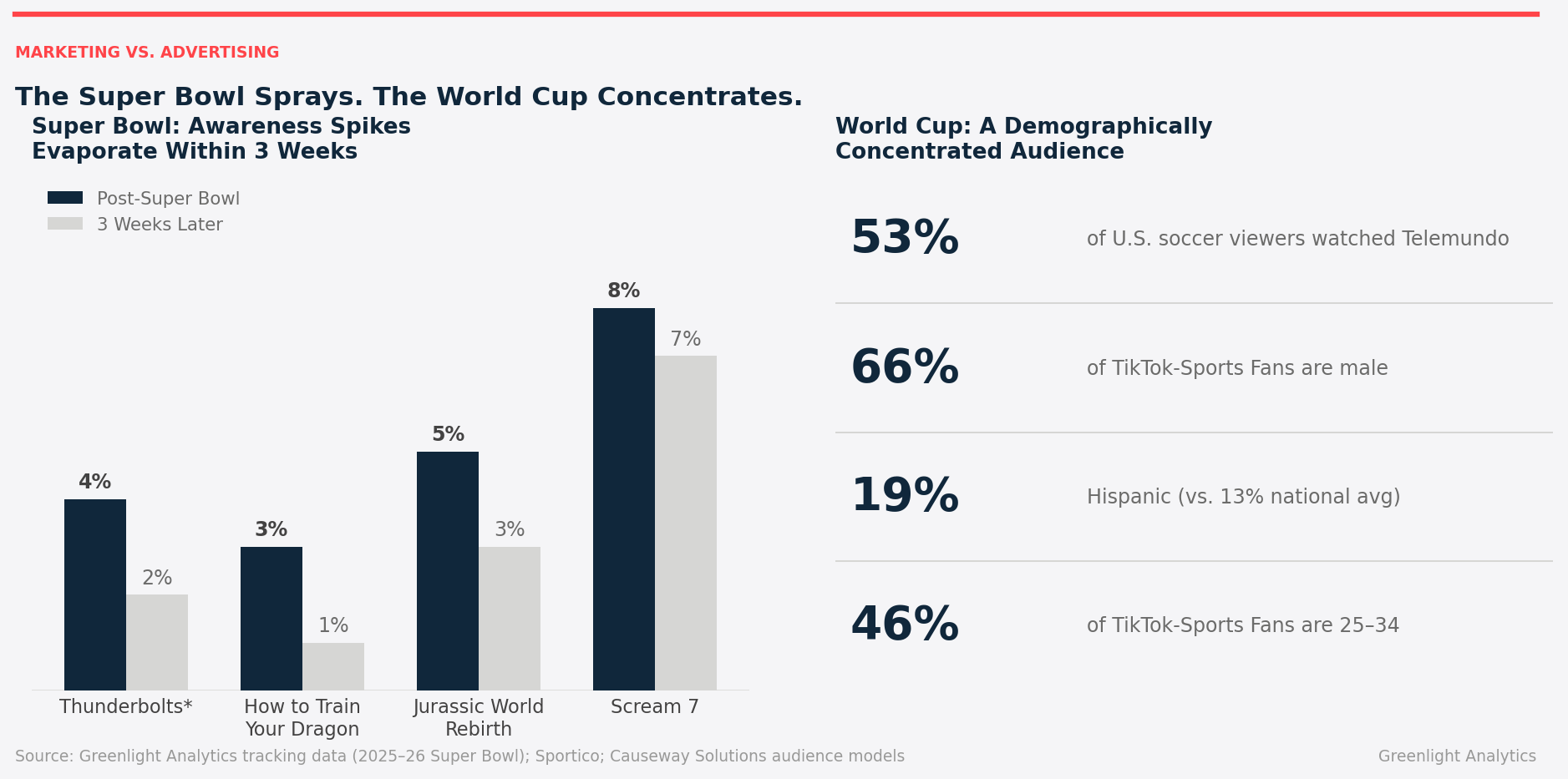
Every year, the network broadcasting the Super Bowl seems to set a new record for the cost of a 30-second advertisement. And every year, Hollywood appears to ignore the results. Movie trailers during America’s most-watched annual telecast generate a surge in Awareness, which then vanishes within three weeks. Not a single advertised film from the 2025 Super Bowl maintained its elevated awareness through its theatrical release.
Now, the World Cup is providing a reach opportunity on par with the NFL. Individual matches have garnered viewership ranging from 20 million to 46 million. Two recent World Cup matches are the most-watched non-NFL U.S. sporting events since the 1994 Winter Olympics, per Puck News. Viewership on Fox is tracking more than 150% ahead of the 2022 World Cup in Qatar (scheduling caveats abound, but still). Studios need to decide how to leverage opportunities such as this in a constantly changing attention economy. It isn’t about whether or not to buy ad space. It’s about positioning promotion as strategic active advertising rather than passive marketing.
Marketing vs. Advertising
There’s a difference between the two that Hollywood still hasn’t quite mastered. Marketing attempts to tap into the zeitgeist and become a cultural presence. Advertising is about putting the right message in front of the right people at the right moment to spur a transaction. In the immortal words of Jerry Maguire‘s Rod Tidwell: Show Me The Money.
The Super Bowl is the epitome of the former. The broadest possible reach with 100 million-ish annual viewers. But those eyeballs belong to a diverse array of demographics. When you market to everyone, that includes audiences who will never have any interest in your movie. The result is that Interest Among Aware remains static, or even declines, for most films plugged during the Super Bowl. Awareness gains can be empty because they’re buoyed by non-core viewers who remain uninterested. That hurts your conversion efficiency. At first glance, the World Cup may look similar. But the specific audience demographics represent a unique opportunity for the right campaign.
World Cup Differentiator
Did you know that Telemundo was responsible for 53% of the viewership for USMNT vs. Paraguay and 72% of Mexico’s opening match? That is a strongly concentrated demographic of viewers opting for an alternative broadcast to Fox’s traditional one.
Did you also know that of the nearly 55 million TikTok-using adult sports fans in the U.S. that Greenlight Analytics has identified, 66% are male, 46% are between the ages of 25-34, and 19% are Hispanic (above the 13% national average)? This is precisely the diverse millennial audience that gets lost in the Super Bowl’s raging river of reach. The World Cup can be a telescopic sight for the right title with the right campaign.
For example, debuting the first trailer for a film during the World Cup can be a strategic targeting campaign with a specific audience demo. A secondary trailer can serve as a conversion tool, parlaying awareness into intent. Different asks that require different functions.
The Case Studies
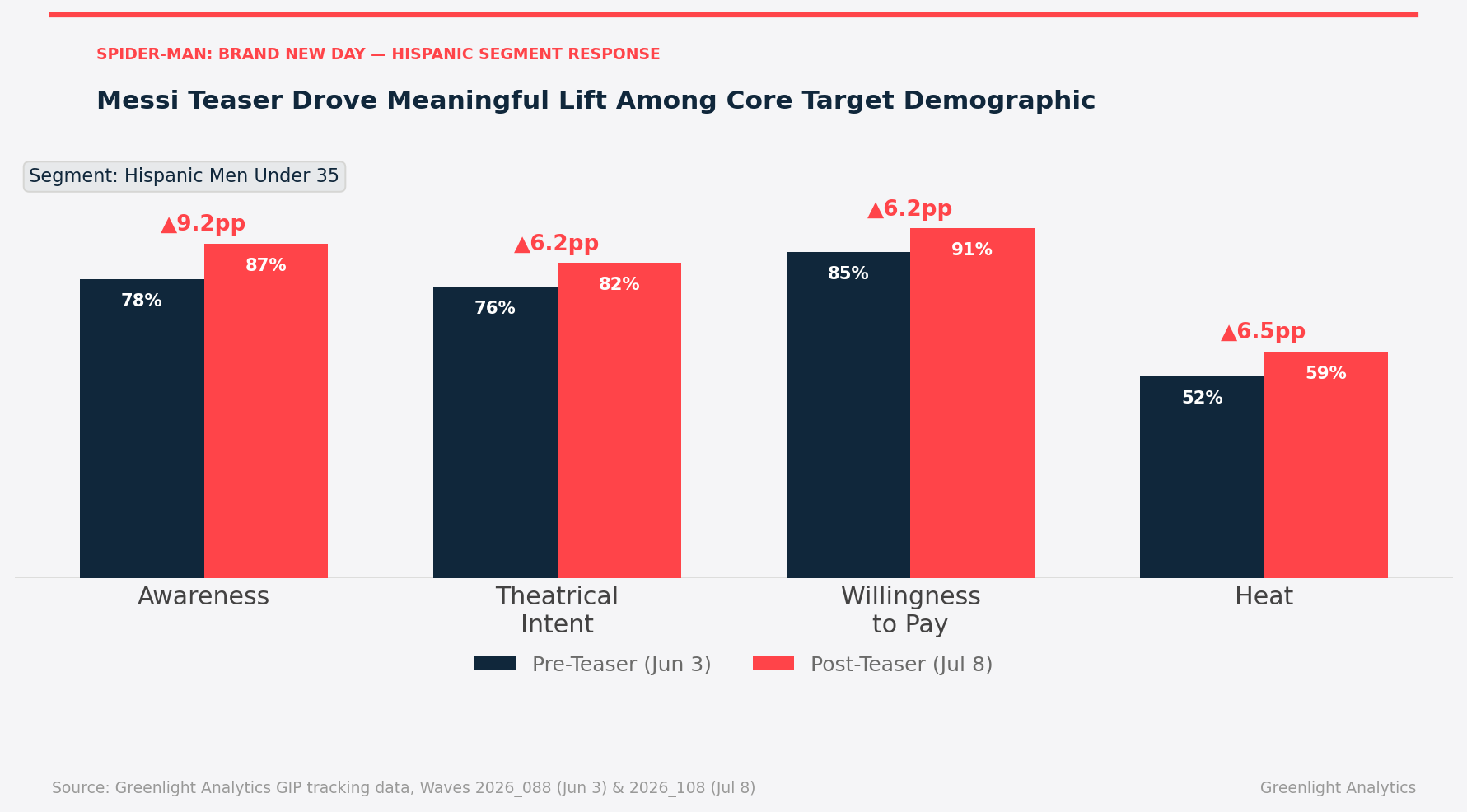
Two studios dabbled with World Cup advertising. The first was Sony, which released a Spider-Man: Brand New Day teaser featuring global superstar Lionel Messi. The promo wasn’t built for mass awareness. It was engineered for this specific audience. Young, diverse, male-skewing social-media using viewers. Since the teaser debuted, Awareness (+12 percentage points), Heat (+6), Theatrical Intent (+6) and Willingness to Pay (+6) have all increased among Hispanic audiences, with Hispanic men under 35 experiencing even stronger movement (+13, +15, +22, +8). It didn’t require a $10 million 30-second ad buy to generate momentum with a specific community.
Netflix also experimented with World Cup-adjacent promotion, though with different results. In April, the studio dropped the trailer for Diego Luna’s Mexico 86, a dramedy portraying the 1986 World Cup. The film debuted June 5, one week before this year’s games began. This was a clear attempt to reach the audiences watching on Telemundo. The hope was that the pre-positioned trailer would build excitement and the release would ride a wave of enthusiasm heading into the tournament. Unfortunately, the film only collected 4.4 million global “views” in its first two weeks, according to Netflix’s data. Still, the logic was there.
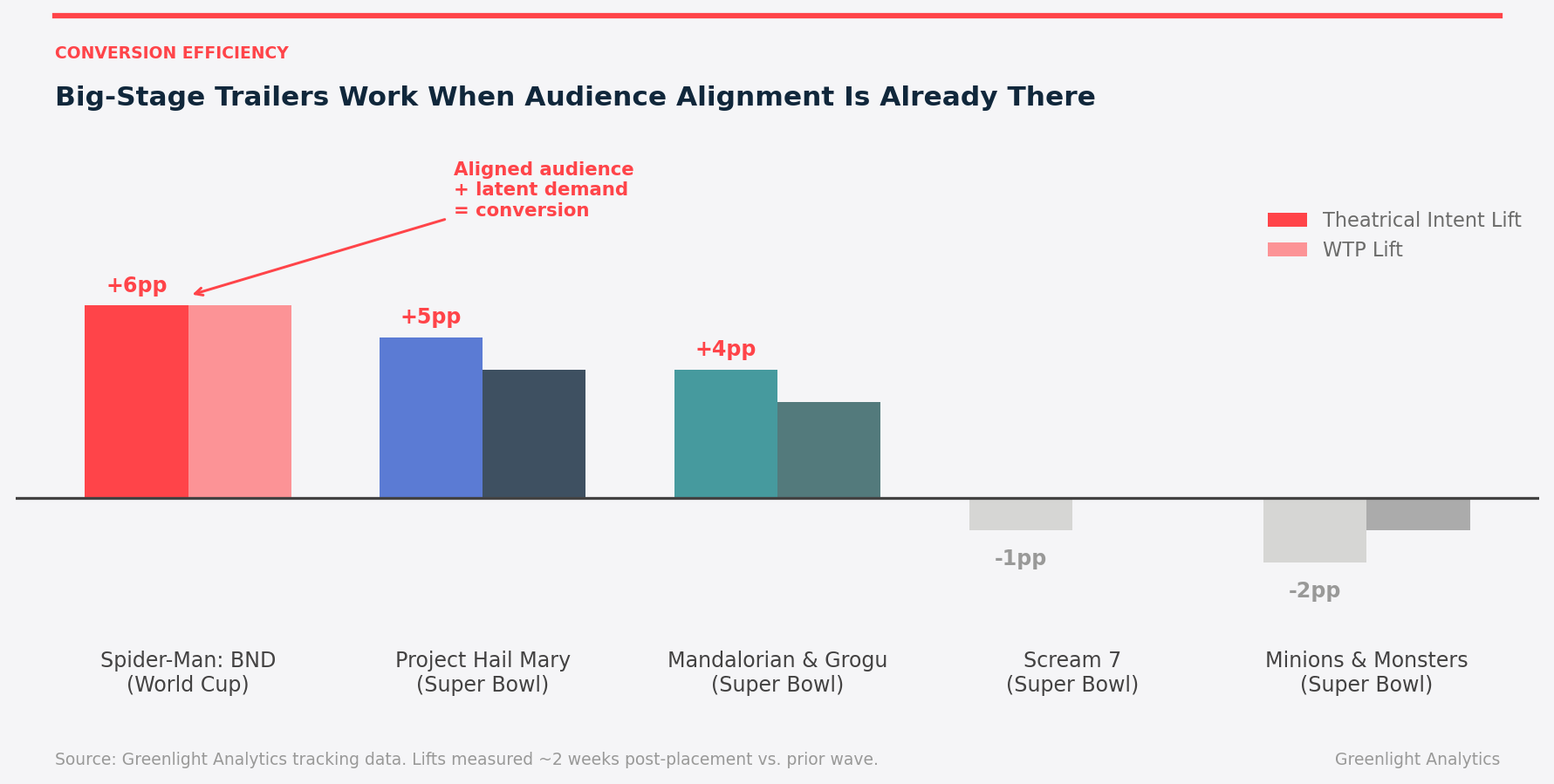
Movies with untapped demand and target demos that cross over sports-adjacent, culturally diverse and younger-skewing can all leverage the World Cup. There exists the opportunity for efficient advertising there. Chasing broad awareness without any strategic alignment or focus may yield empty marketing.
Conclusion
Fox’s 30-second ad costs have reportedly topped out at around $2 million for USMNT matches. Any studio with a clear grasp on its target audience and their behaviors can justify the value of that spend. Any studio opting for the spray-and-pray approach cannot. By tracking Awareness, Interest, Theatrical Intent, Willingness to Pay and all the other illuminating metrics, you can validate whether or not the promotional campaign converted audiences into paying customers. More importantly, you can find the overlooked and undervalued opportunities to do so.