
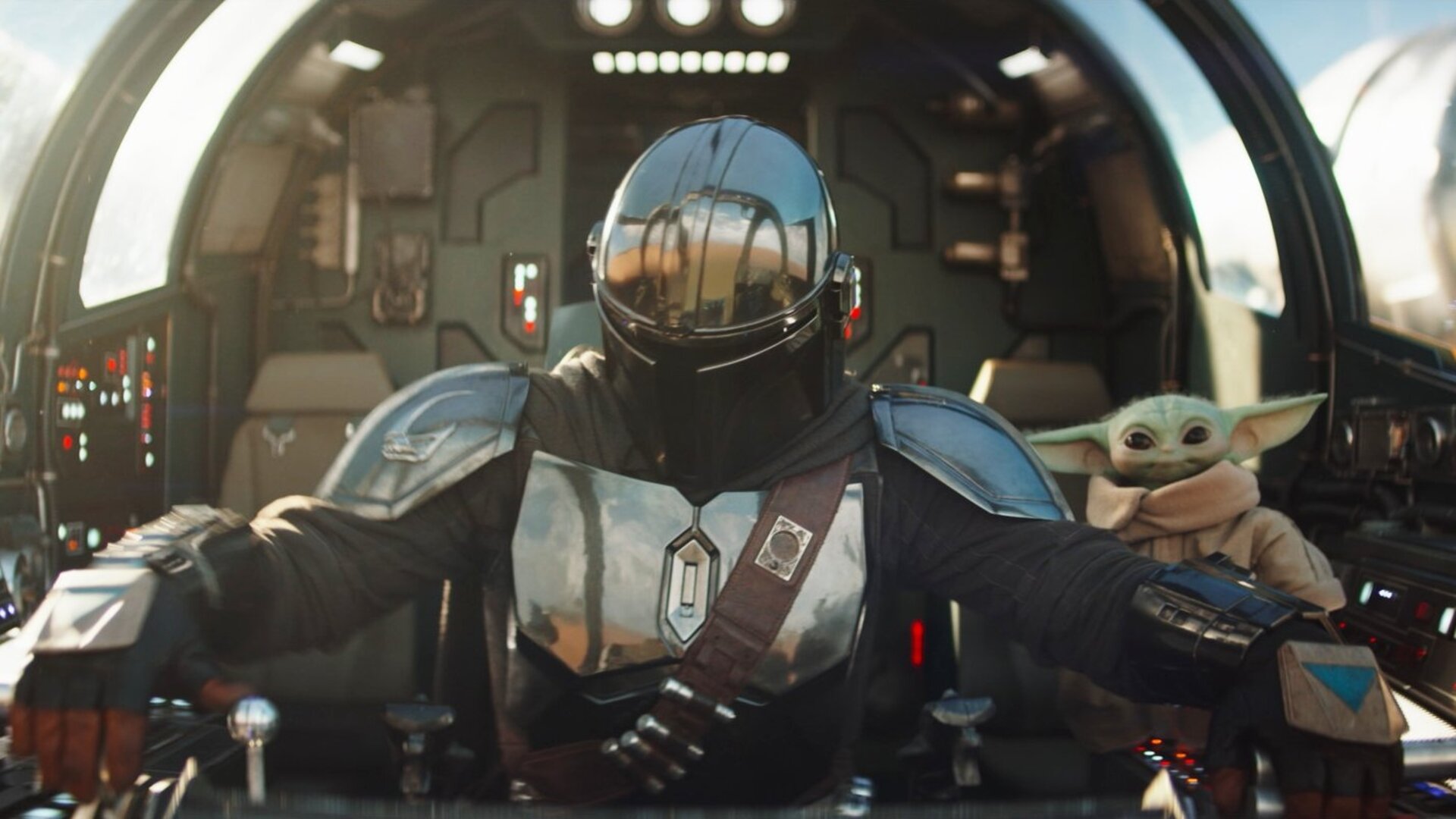
Box Office Behavior: Why Studios Still Spend Millions On Super Bowl Trailers
February 23, 2026
The Super Bowl was played two weeks ago as of this writing. In a one-sided competition, the most compelling drama may have occurred between the game play. The average 30-second ad spot this year cost around $8 million. A small handful of spots went for a record $10 million. Numbers so high they surely would have put Don Draper into a coma.
Given the cost and the seismic shifts in the entertainment landscape, movie studios should be furiously running numbers to determine if the juice from reaching the broadest annual American audience is worth the squeeze. Last year’s data didn’t merely suggest that. It proclaimed it from atop a mountain Ron Burgundy-style.
Super Bowl trailers can create short-term awareness spikes. But awareness doesn’t automatically translate to sustainable demand. What good is a multi-million dollar trailer drop if it doesn’t result in more ticket purchases? In this year’s truncated post-Super Bowl window, the data suggests that costly trailer drops might help in very selective circumstances.
What Actually Jumped (And What Didn’t)
Of the seven main titles promoted during the Super Bowl, five saw some level of Awareness lift. Getting the word out is always the first step.
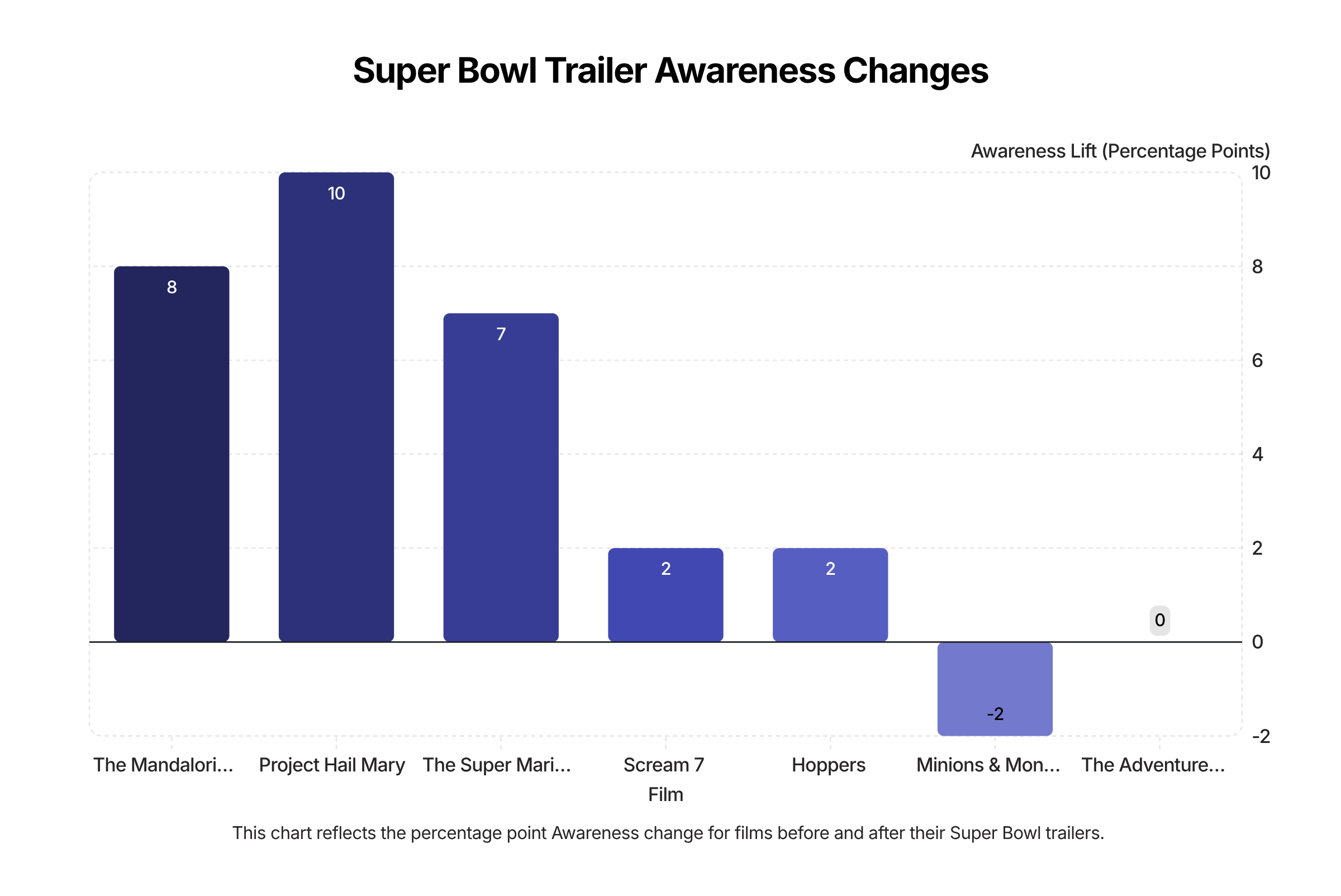
There are a few caveats worth mentioning. The Adventures of Cliff Booth is a Netflix original spinoff-sequel to Quentin Tarantino’s Once Upon a Time in Hollywood that won’t be receiving a robust theatrical rollout. This was just its first trailer and it came as a surprise to many. Since Scream 7 hit tracking, it’s been one of the most popular 2026 films in Greenlight Analytics’ dataset, leaving it less room for upward mobility.
Generally, films with mid-level baseline Awareness (Project Hail Mary) benefit more from Super Bowl trailers than titles that are already saturated (Scream 7) or are just starting to inform the world they even exist (Cliff Booth).
Interest vs. Awareness
Our longer-term snapshot of last year’s Super Bowl proved that Awareness spikes didn’t necessarily create new interest. Shrinking the timeline to just two-weeks post Super Bowl, how is that notion holding up thus far? About the same.
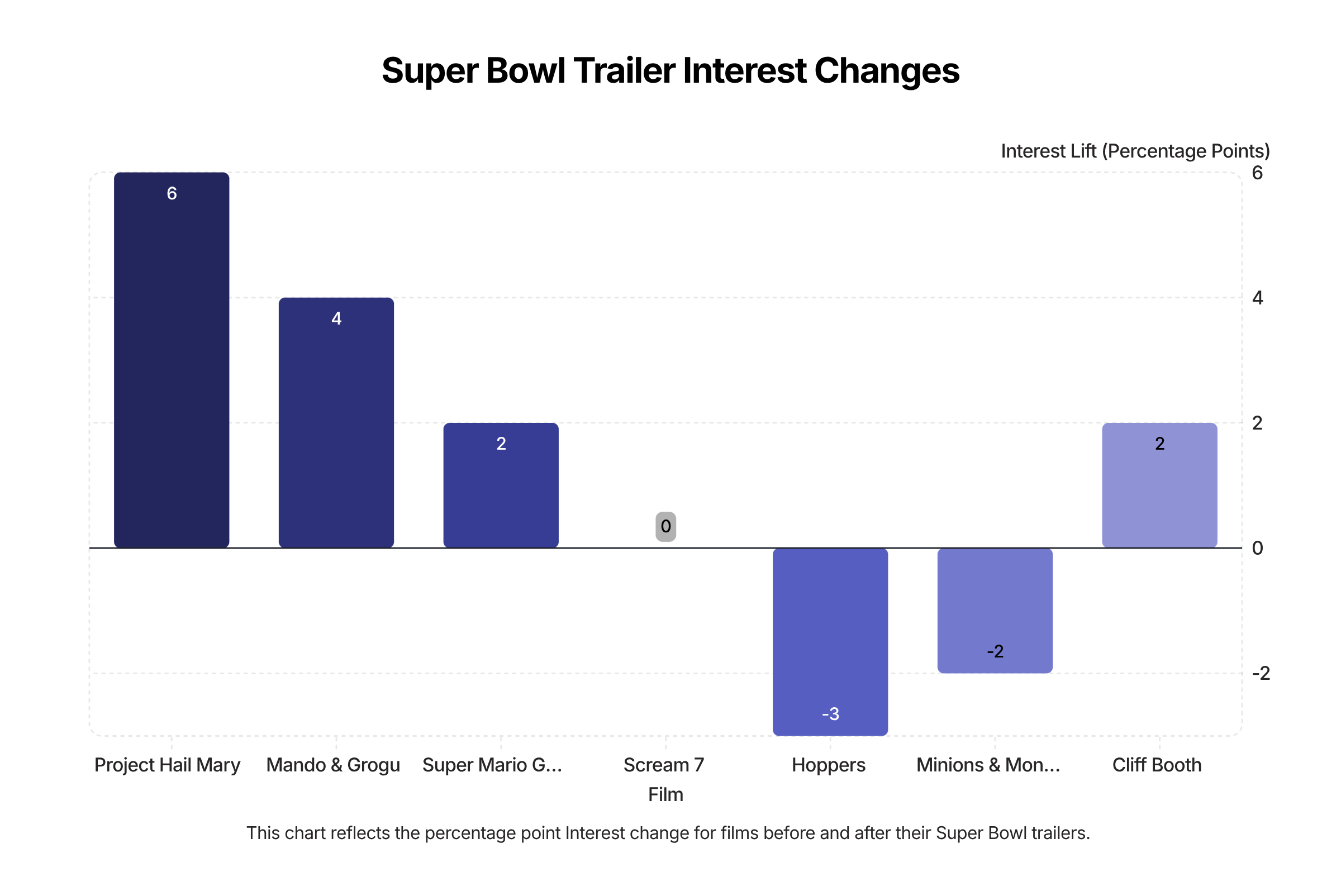
Franchise horror and kids animation have not yet seen meaningful interest lifts from their costly Super Bowl promotion. Sci-fi event blockbusters such as Project Hail Mary (new-to-screen) and The Mandalorian & Grogu (the first Star Wars film since 2019) have. This is the crux.
Conversion Efficiency: The Real Story
Of the seven films, six saw their Interest Among Aware scores remain flat or decline. This implies that the gains in Awareness were mostly driven by non-core fans. This is the benefit of promoting to the largest yearly American TV audience. You’re getting your trailer in front of all demographics and not just the target audience. Broad reach naturally dilutes IAA. But the real value isn’t whether this number fluctuates by a few points. It’s whether Theatrical Intent and Willingness to Pay rise regardless.
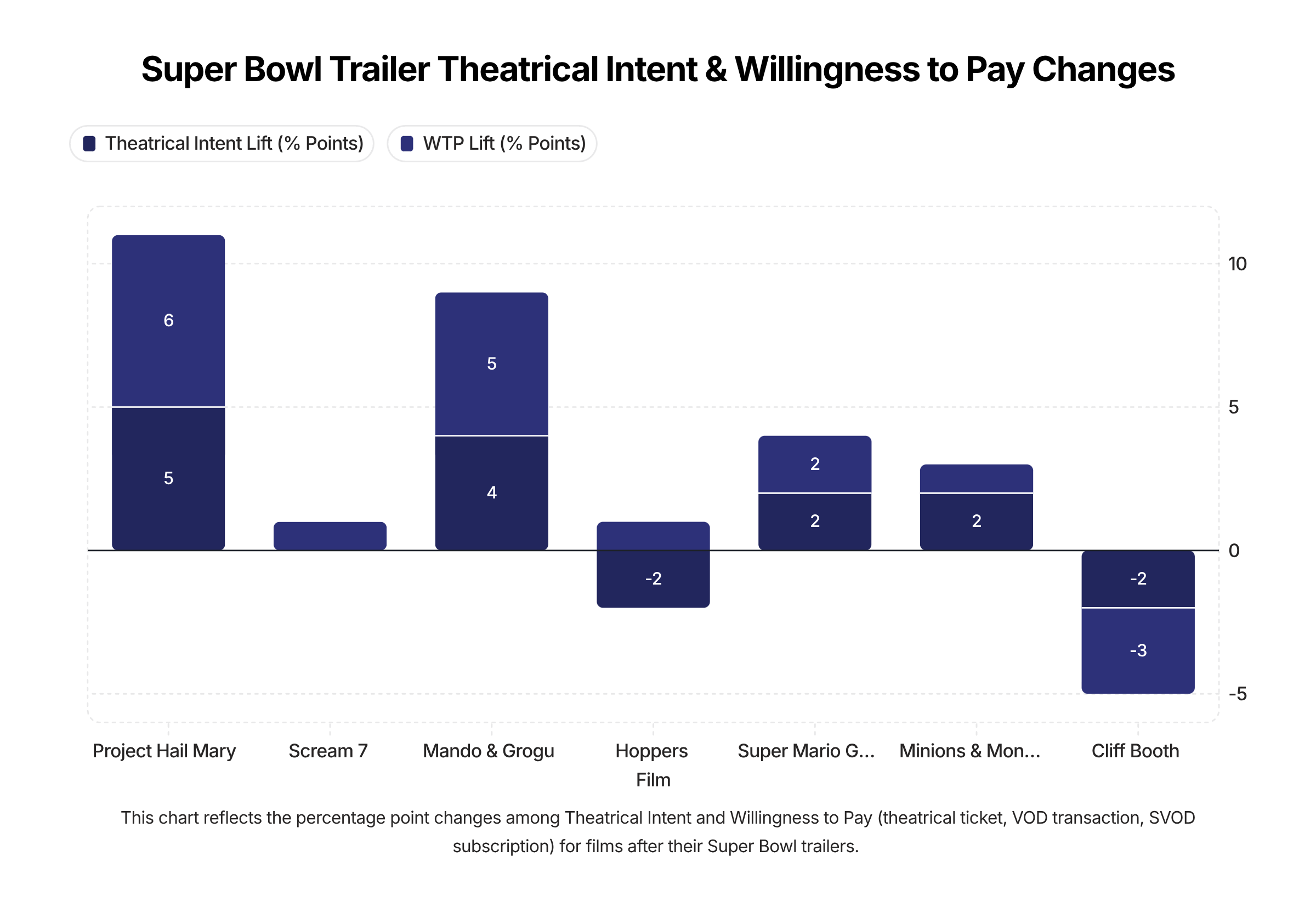
Project Hail Mary, The Mandalorian & Grogu, and The Super Mario Galaxy Movie enjoyed the strongest improvements in Theatrical Intent (those planning to see a film in theaters) and Willingness to Pay (theatrical ticket, VOD transaction or SVOD subscription). Scream 7, Hoppers, Minions & Monsters and Cliff Booth either remained flat or saw their scores drop for the most part.
Super Bowl trailers are most effective when platforming new-ish big screen spectacle. Action, scale, and excitement that calcify into urgency for concepts or characters still building connection. Original/new-to-screen ideas are still searching for their audiences, and must offer a strong hook.
Familiar long-running franchises already have defined audiences that don’t necessarily see huge movement title to title. This is why Jurassic World: Rebirth likely would have hit the same numbers last year with or without a Super Bowl assist.
Super Bowl Thesis
The real test of the Super Bowl’s marketing power is if it can sustain any lifts we have seen thus far weeks into the future (and ideally well into opening weekends). For now, it’s quite clear that the big game cannot manufacture artificial demand or help consistently convert Awareness/Interest into monetizable action. Instead, Super Bowl trailers reaffirm event positioning, accelerate Awareness for mid-tier films, and tap into latent demand that benefits from a grander stage.
Looking ahead, if Interest Among Aware holds steady, these lifts could prove durable. If Interest Among Aware erodes in the coming weeks, it confirms what our last study found: empty marketing calories.
The Super Bowl may not be a total waste for studios. But you can’t drop $8 million-$10 million and expect your big game spot to work miracles. Doing things the way they’ve always been done is how you end up at the bottom.
Spending smarter requires a deeper understanding of your own film’s strengths and vulnerabilities. If your movie already boasts strong underlying interest ready to be converted with more reach, the Super Bowl may be right for you. If your movie is still trying to persuade audiences it’s worth seeing, you might just be throwing money into the void.
In 2026, that distinction matters more than ever.