
Box Office Behavior: A Modern Playbook for Original & New-to-Screen Films
January 13, 2026
Unless you’ve been living under a rock — or the Rock, given his propensity for franchises — it’s clear that established intellectual property (films based on comic books, novels, video games, musicals, as well as sequels, prequels, spinoffs, reboots, etc.) dominates the box office. Unfortunately, the rise of IP has come at the expense of original and new-to-screen (i.e. no previous films even if they’re adaptations) concepts, which have struggled in the last 15 years. Yet these films remain vitally important to Hollywood health—both as the building blocks of tomorrow’s franchises and as bottom-line ROI drivers when all goes right.
The industry hasn’t abandoned this lane (see: Sinners, Weapons, and fresh IP such as A Minecraft Movie). But much like the tech industry’s periodic forays into virtual reality, it hasn’t been able to consistently sell them to audiences. We’re here to help with that.
By analyzing 40 commercially successful original and/or new-to-screen movies released between 2021-October 2025, we can better position Hollywood’s new gambles for bankable results. Essentially, we’re putting a scope on the fire hose by identifying which IP sources and genres deliver the strongest results with specific audiences. (Success in this study has been defined by films that demonstrated commercial viability by justifying their production budgets at the box office, generating enough audience demand to deliver a sequel/continuation, or—in one case—breaking streaming viewership records).
What Success Looks Like for Original/New Movies
Before delving into IP type and genre, we’re going to look at the average scores across core metrics and demographics for all 40 films to understand the baselines.
By week of release, average Awareness for this collection plateaus around 46%, which is well below the norm for most franchise films. Interest (48%) and Interest Among Aware audiences (63%) are stronger, though these scores hardly jump off the page. Theatrical Intent (41%) is also relatively soft, underscoring the difficulty in converting interest to ticket sales for unfamiliar stories even among the box office wins. A 57% Willingness to Pay (theatrical ticket, VOD transaction, or subscribing to a streamer) score is decent, but has room to grow post-release with positive word-of-mouth.
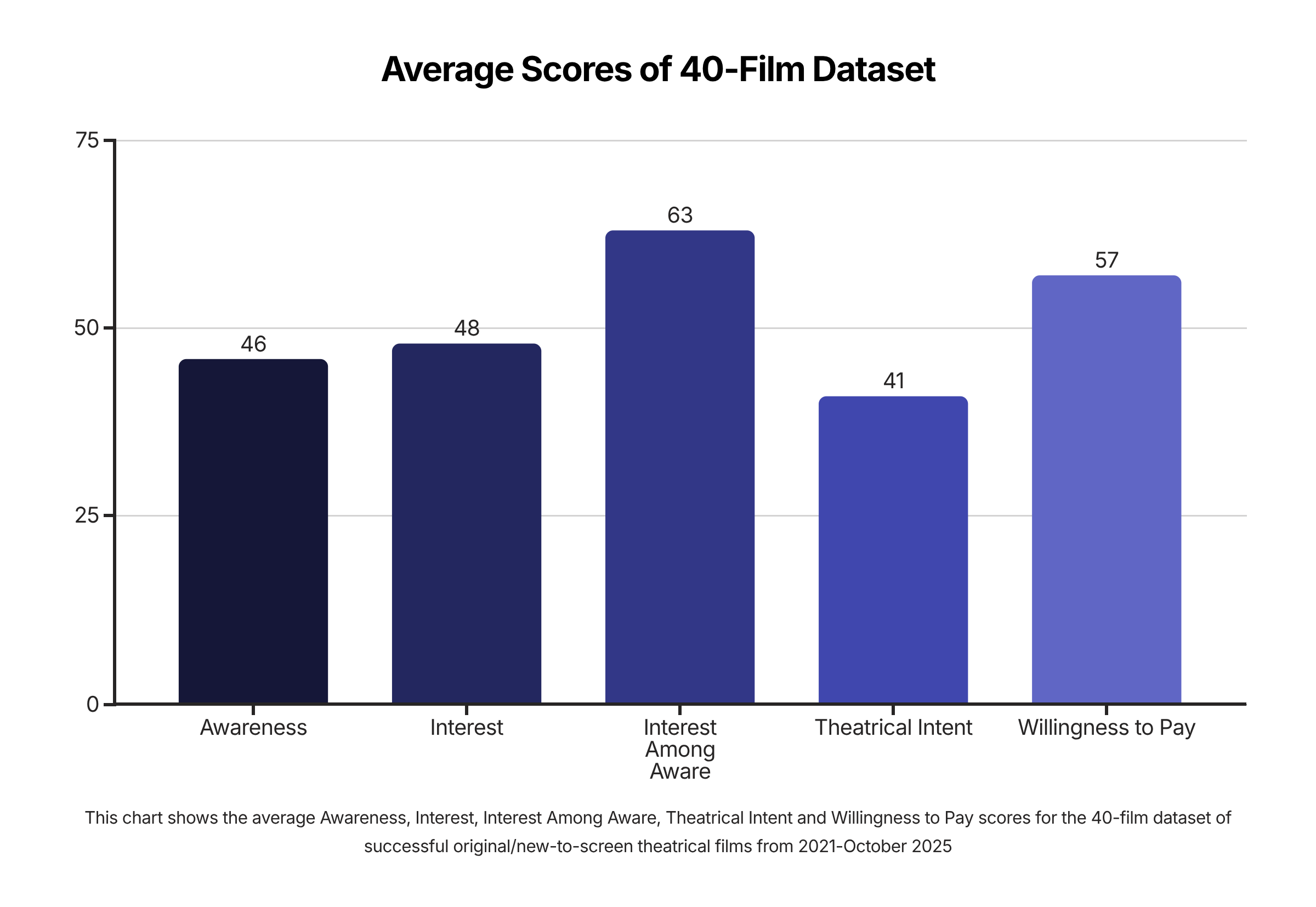
Audiences 35 and older slightly over-index in Awareness and Interest, while the Under 35 crowd leads in Theatrical Intent and WTP. Despite a relatively even Awareness split among men and women, male viewers lead in Interest, Theatrical Intent and WTP.
The bird’s-eye view here is that audiences aren’t rejecting originals out of broad dislike. Instead, their box office struggles usually boil down to smaller-scale awareness. Reaching enough people to start convincing them is the thorn in the side of the studio.
Not All IP Types Are Equal
Getting more bang for your development buck starts with aiming more accurately by understanding where successful stories come from.
Among our group of 40 films:
- 20 were original concepts
- 13 were adaptations of existing source material
- 5 were based on real-world subjects
- 2 were video game adaptations
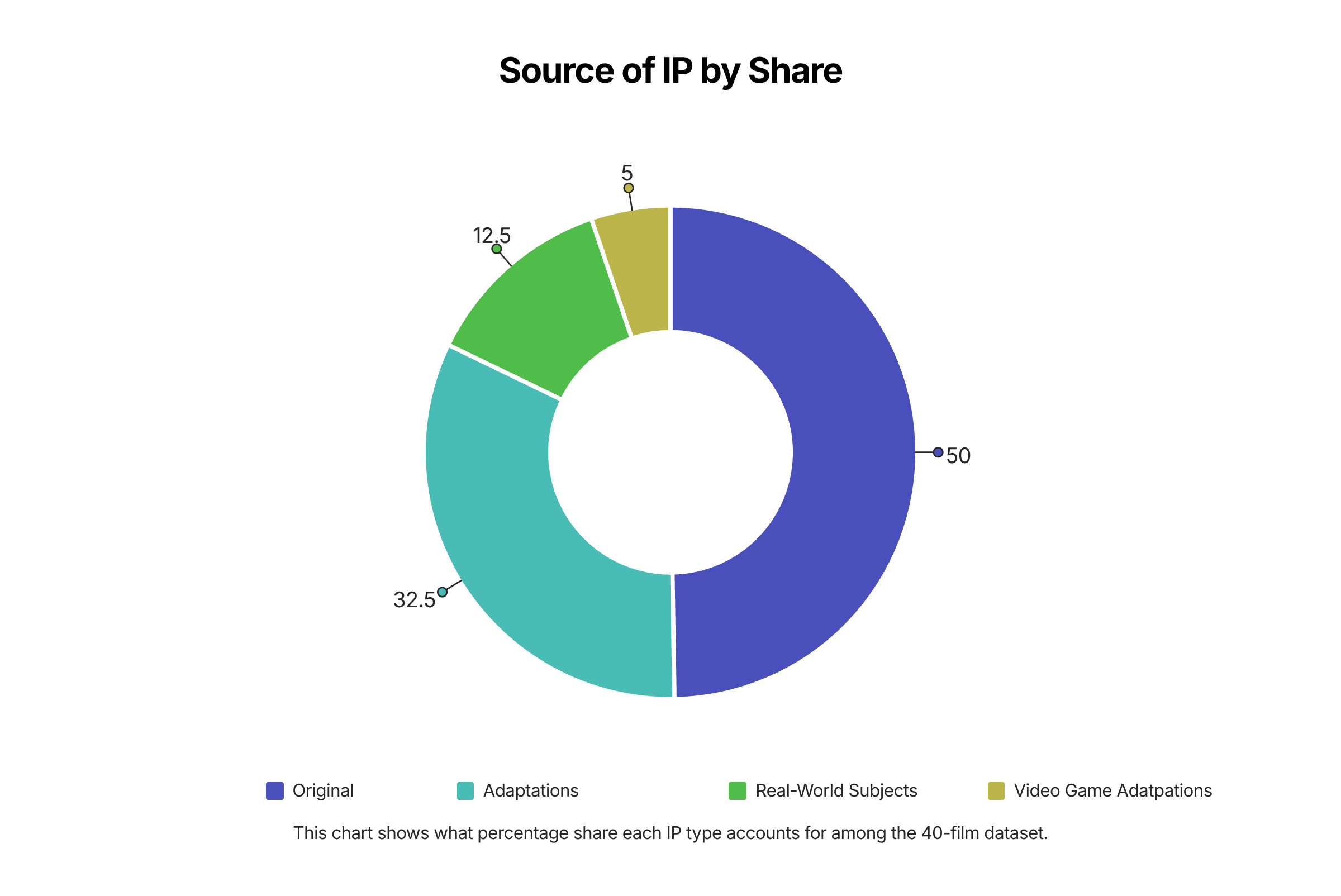
The takeaway here is that source material (Wicked, Where the Crawdads Sing), real public/historical figures (Oppenheimer), and cultural familiarity (F1: The Movie) can be beneficial in launching fresh theatrical ideas. Pure originality can work. But your best bet is to anchor it to upside genres and/or align it with pre-existing touchpoints.
Genre Is the Real IP
Let’s move one layer deeper from concept sourcing to genre. Here we find that:
- Horror (10 titles) and family-friendly kids entertainment (8) are the most dominant
- Action (action/action comedy) and Romance (romantic dramas/romcoms) account for six titles apiece
- Biographical films (5) punch above their weight
- Straight dramas, comedies and concert films are harder to pull off and only account for four total titles. (Shoutout to the oft imitated but never duplicated Taylor Swift).
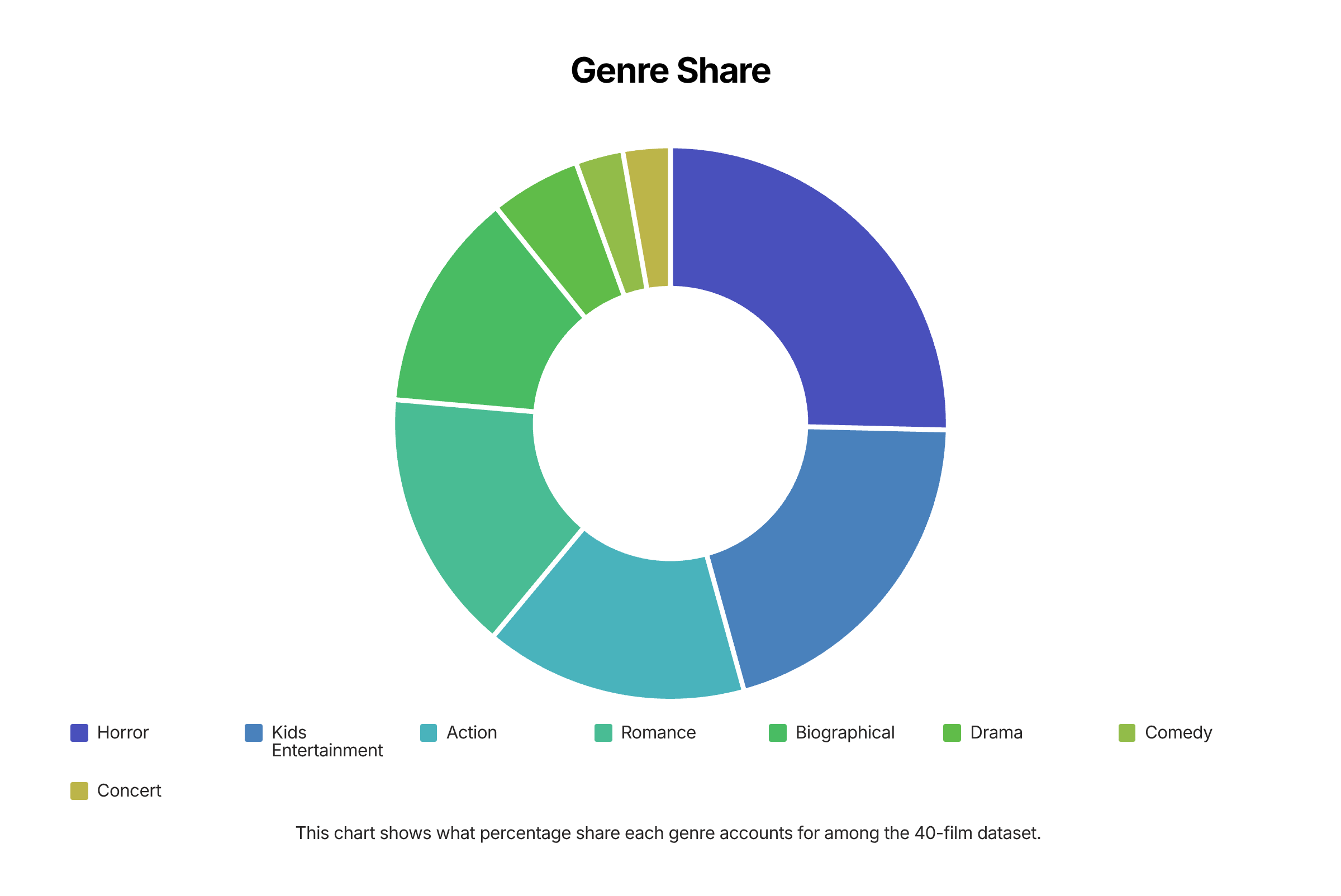
Here we can see how genre alignment helps amalgamate what IP usually provides. Horror demands urgent communal theatrical viewing. Family-friendly entertainment boasts broad appeal and high monetization potential. Action typically guarantees big screen spectacle. Biographical films offer built-in familiarity often featuring beloved music in this case. Unfamiliar films falter when they fail to cultivate any of these attributes. You have to incentivize audiences.
Genre Deep Dive
Horror
Horror is the most reliable vehicle for original concepts. On average, the genre’s successes in this analysis boast good Interest (52%) and Interest Among Aware (68%) scores despite unspectacular Awareness (45%). Still, a near 1:1 Intent Conversion score (Awareness ÷ Theatrical Intent) of .97 and solid WTP (59%) underscore its ability to generate revenue. Smile, The Black Phone and Five Nights at Freddy’s are good examples in addition to Sinners and Weapons.
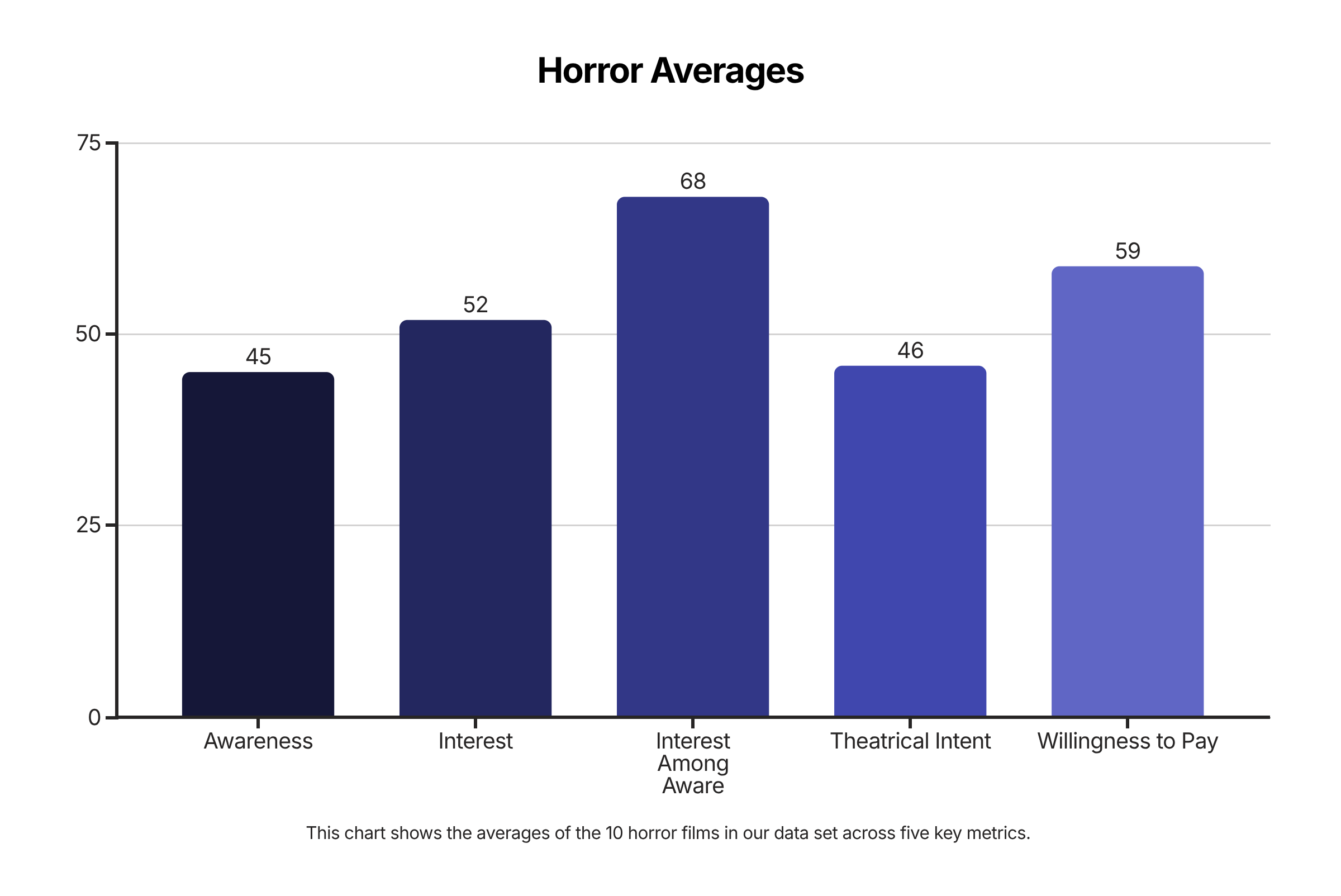
Though male audiences lead in most every category, female moviegoers often separate flops, mild successes and true breakouts with floor-raising scores in Interest (50%) and WTP (55%). Interestingly, we also saw the genre skew younger in 2025 vs 2023-2024.
Horror originals don’t need to muster awareness en masse. Instead, creative mysteries and marketing clarity drive most of the turnout.
Family Friendly Kids Entertainment
Here we have the highest average Awareness (51%), but surprisingly quieter average Interest (44%) and Interest Among Aware (53%). Theatrical Intent and Willingness to Pay both over-index with the 35+ crowd, likely because Greenlight Analytics does not survey under-18 audiences.
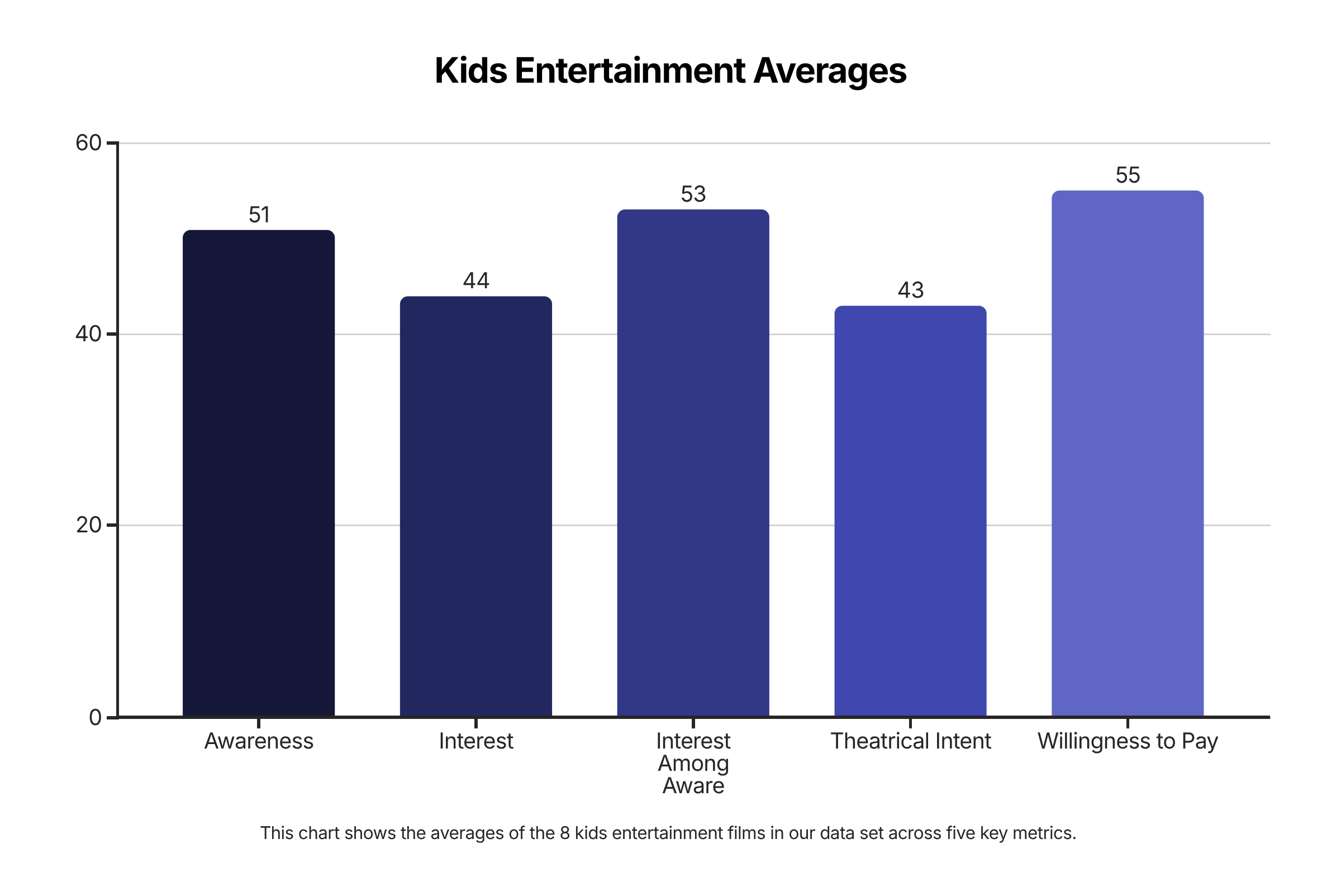
Still, parents frequently spend on entertainment. Recognizable IP sequels have smashed the $1 billion mark in recent years. Conversely, unfamiliar family films are more of a sampling game than must-see opening weekend events.
Movies like The Bad Guys ($97 million) and The Wild Robot ($144 million) boast healthy floors, but didn’t do gangbusters business. Other movies, such as Encanto, were impacted by COVID before becoming streaming sensations (it’s the most-viewed movie on streaming in the U.S. since its release, per Nielsen). At-home rewatchability is essential for paving the way to a breakout sequel opportunity like the above examples.
Action
Despite the John Wick-ification of the release schedule, new action films struggle with the lowest average Awareness (39%) among the major genres here. But those that are aware tend to express strong interest (68%) alongside rock solid Theatrical Intent and WTP among men and the under 35 crowd. Think Bullet Train, Civil War and Sound of Freedom.
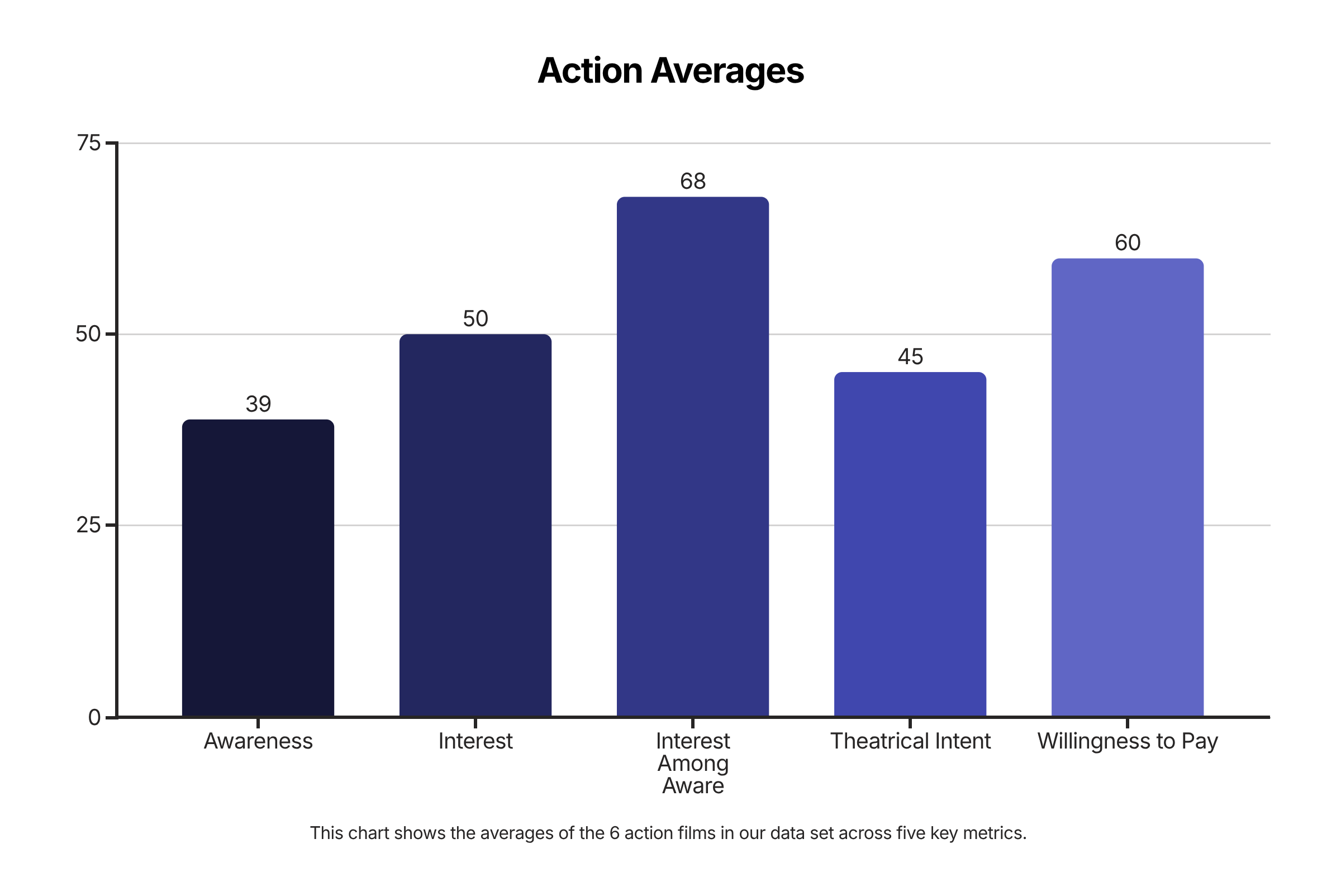
That impressive conversion helps to partially compensate for narrow reach. It also tells studios that fresh action flicks require slightly heavier marketing lifts. Bring on bunches of punches!
Romance
This genre is tied for the lowest average Awareness (39%), but similarly makes up for it with a decent Interest Among Aware score (64%). Romantic dramas and comedies are largely driven by audiences under 35 when it comes to Theatrical Intent (51%) and WTP (65%). The Lost City, Ticket to Paradise, Anyone But You, Materialists and Regretting You are all recent success stories here.
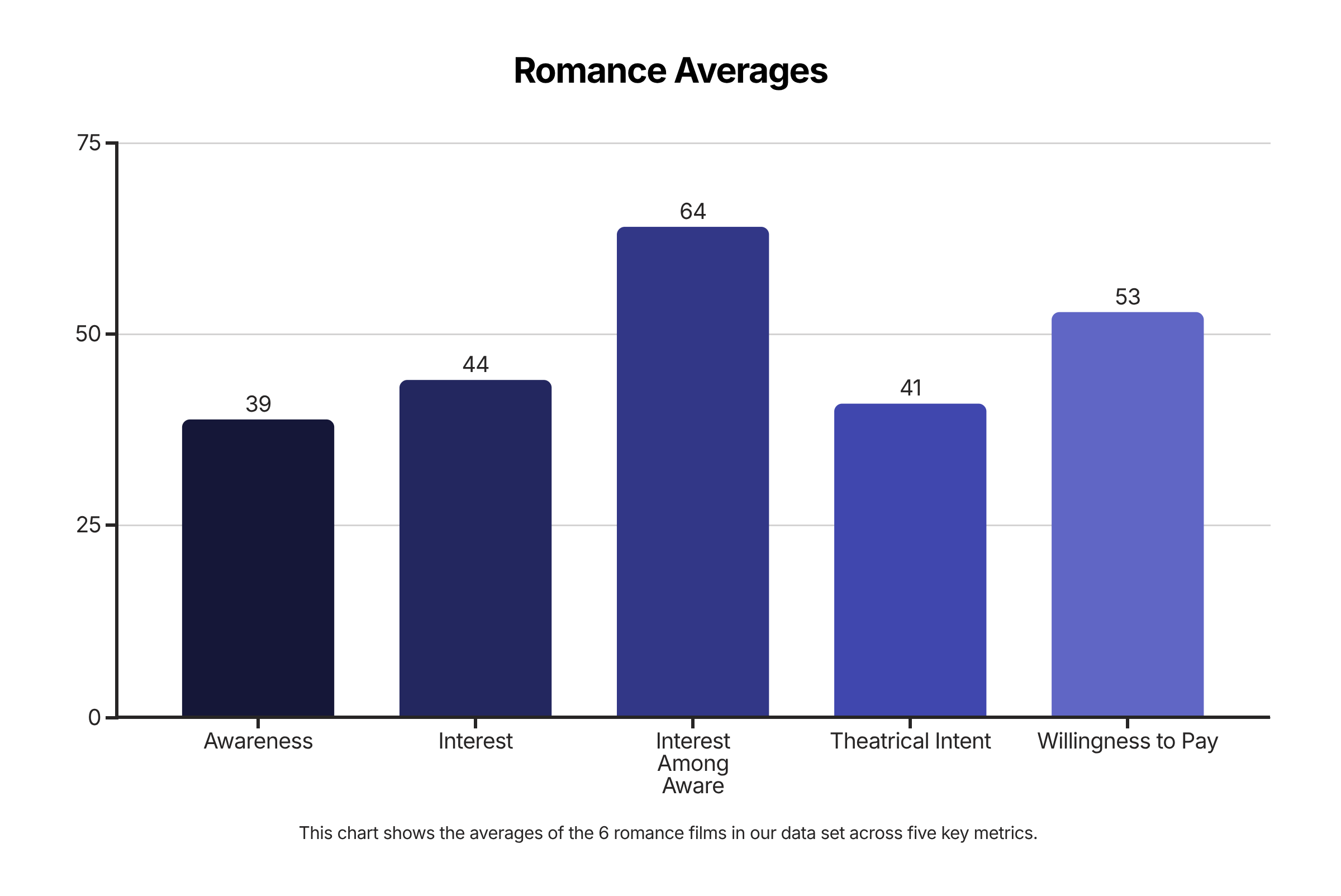
The romance genre is prone to late-cycle erosion, meaning that interest can wane in the final four weeks of marketing before release. Interest Among Aware can be quite high here. But sustaining or growing that interest is difficult as the genre struggles to expand to additional demographics.
Biographical Films
Biopics and biographical dramas have high average Awareness (52%), especially among 35+ viewers. This genre often sees stable Interest, Theatrical Intent and WTP while having a consistent male skew.
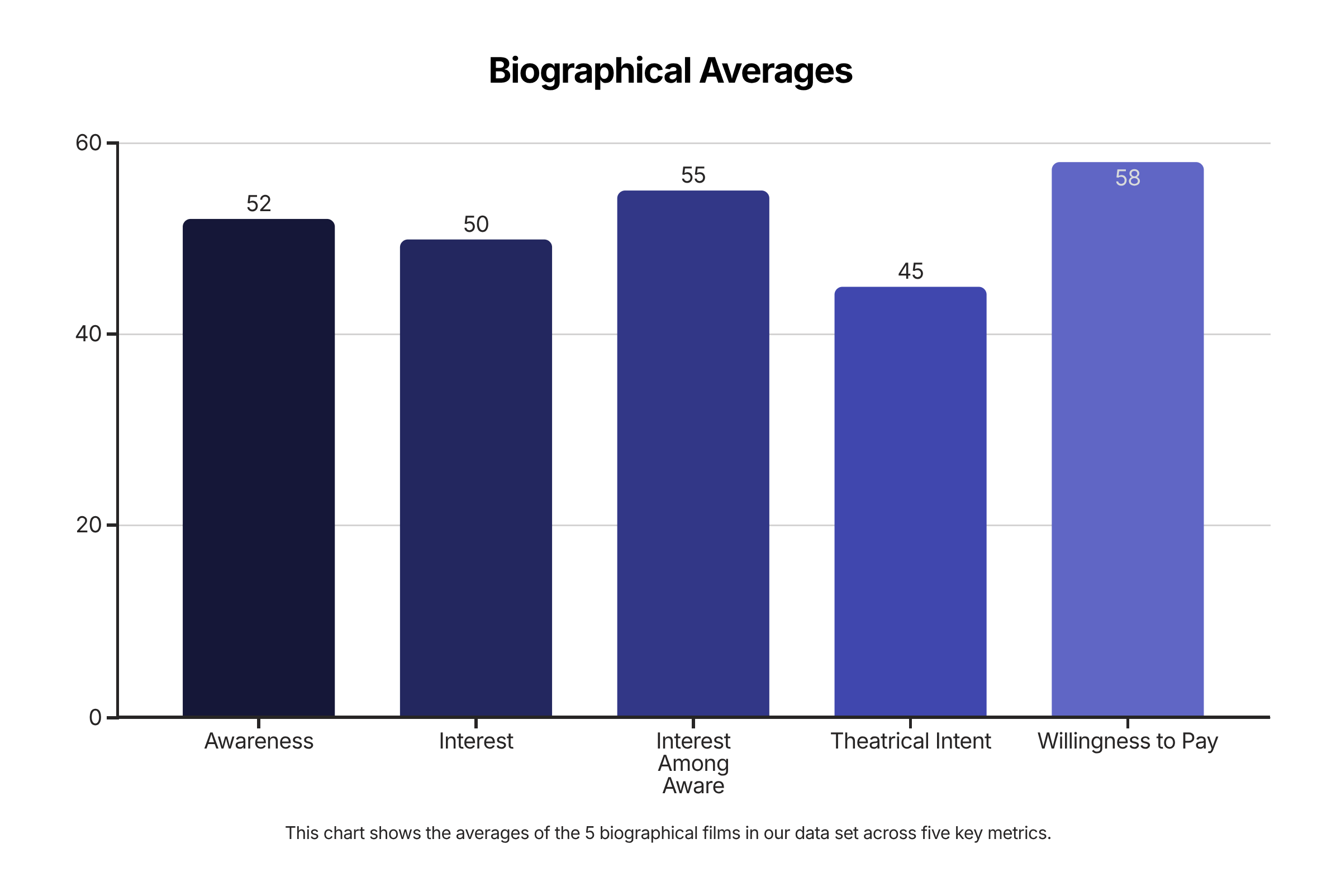
As mentioned, the built-in familiarity with famous figures serves as a stand-in for pre-established IP. You don’t have to sell audiences as hard, especially for musical biopics such as Elvis, Bob Marley: One Love, and A Complete Unknown.
Studio Prescriptions
This analysis leaves us with a few key learnings.
- Awareness is the main vulnerability for original/new-to-screen concepts. But strong Interest Among Aware scores prove that concepts can engage audiences once they’re exposed to marketing. Male audiences tend to lead across most genres, but female-led awareness is crucial for the Romance and Kids genres.
- Genre clarity is instrumental in starting off on the right foot. Horror, kids entertainment, action, romance and biographical films are the most successful. Outside of horror, don’t get too cute with your concepts. Keep it easily digestible.
- The best way to reduce risk is to tie an original/new-to-screen movie to a hot genre, adaptation of new-to-screen IP, real people, or pre-existing touchpoints.
- The under 35 audiences power higher Theatrical Intent and WTP, making them the most monetizable segment. Emphasize this demographic first.
- You don’t need to match franchise IP in Awareness. You need to efficiently convert audiences from Awareness and Interest into theaters through smart marketing.
Fresh big screen storytelling isn’t dead. Hollywood doesn’t need to only chase blockbuster strategies. Instead, the data makes a clear argument for aligning conceptual sources, genres, audience targets and marketing. Sprinkle in some quality and you’ve got yourself a new success.