
Box Office Behavior: What First Trailers Tell Us About a Movie’s Box Office Potential
October 2, 2026
Movie trailers have taken on an event-level status of their own in Hollywood. Anticipation for brief snippets from upcoming films across teasers, trailers and convention-exclusive releases creates its own distinct demand. The viewership numbers for the highest-performing trailers keep going up in the digitally connected world. Records are being set and broken left and right. Trailers and their subsequent performance are make-or-break steps in the marketing cycle. But don’t get swept up in the raw totals. What trailer views do not indicate is actual excitement or theatrical persuasion among viewers. First impressions are often the most important, but are first trailers reliably effective success and failure signals for upcoming releases?
Today, I’ll explore the key post-release tracking indicators of healthy and harmful movie trailer debuts, the positive patterns to look out and plan for, as well as the pitfalls to avoid. In doing so, studios and marketers will gain a firmer understanding of how to navigate pre-release marketing campaigns and adjust midflight.
A Successful First Impression
Movie trailer releases naturally lead to some awareness growth. Whether for a smaller original film or the next installment of a well-established franchise, trailers help make sure more people know about an upcoming movie. But the true measure of its effectiveness comes from whether it spurs more audience interest and intent to watch. The ultimate goal is more eyeballs, not just more awareness.
Two holiday releases from 2025 provide good examples here. Both The Housemaid ($19 million debut en route to $126 million domestic) and Marty Supreme ($16 million, $96 million) enjoyed their highest respected tracking gains following their first trailers. Both films improved from below average awareness to moderate awareness by double digits. But, most importantly, they both grew theatrical intent at the same clip among target audiences. That growth did not start and end with their initial trailers, of course. Both films successfully grabbed the initial attention they needed as the foundation for their eventual theatrical runs.
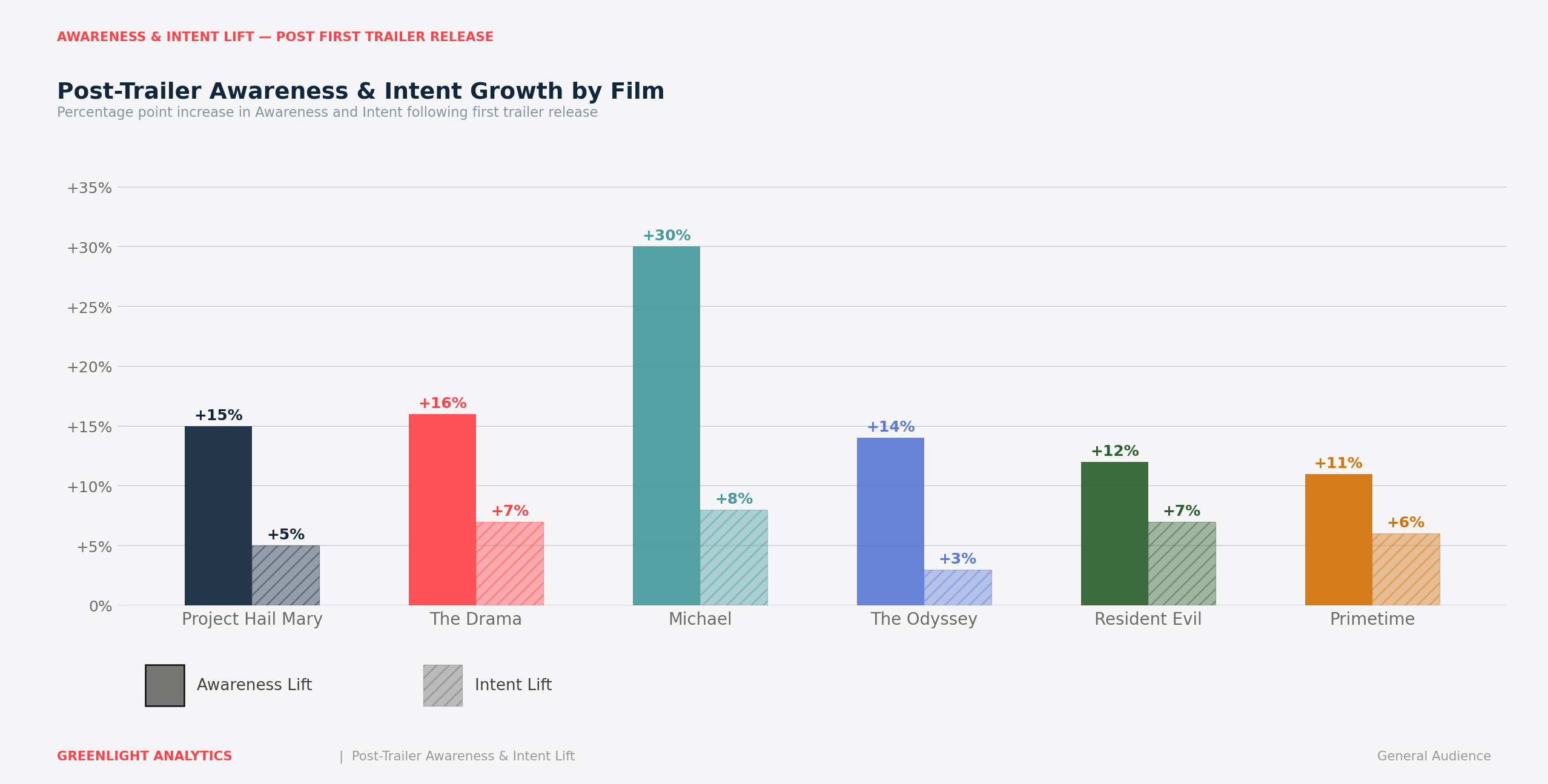
Through 2026 so far, other original films or new IPs saw similar boosts after their first trailer releases. The most notable among this group is A24’s Backrooms ($81 million opening, $198 million domestic), which likewise also saw double-digit growth in both awareness and intent not only among its younger-skewing target audience but in the general public overall. Moderate performers like The Drama ($14 million, $48 million) and Primetime (which just recently opened to $19 million) saw similar double-digit growth in awareness but slightly smaller intent lifts. Larger IP-driven films like Project Hail Mary, Michael, The Odyssey, and Resident Evil also saw significant overall awareness growth (Michael grew a whopping 30% following its viral trailer release) with only comparatively moderate intent growth, mostly because each film was already near its peak impressive levels of intent.
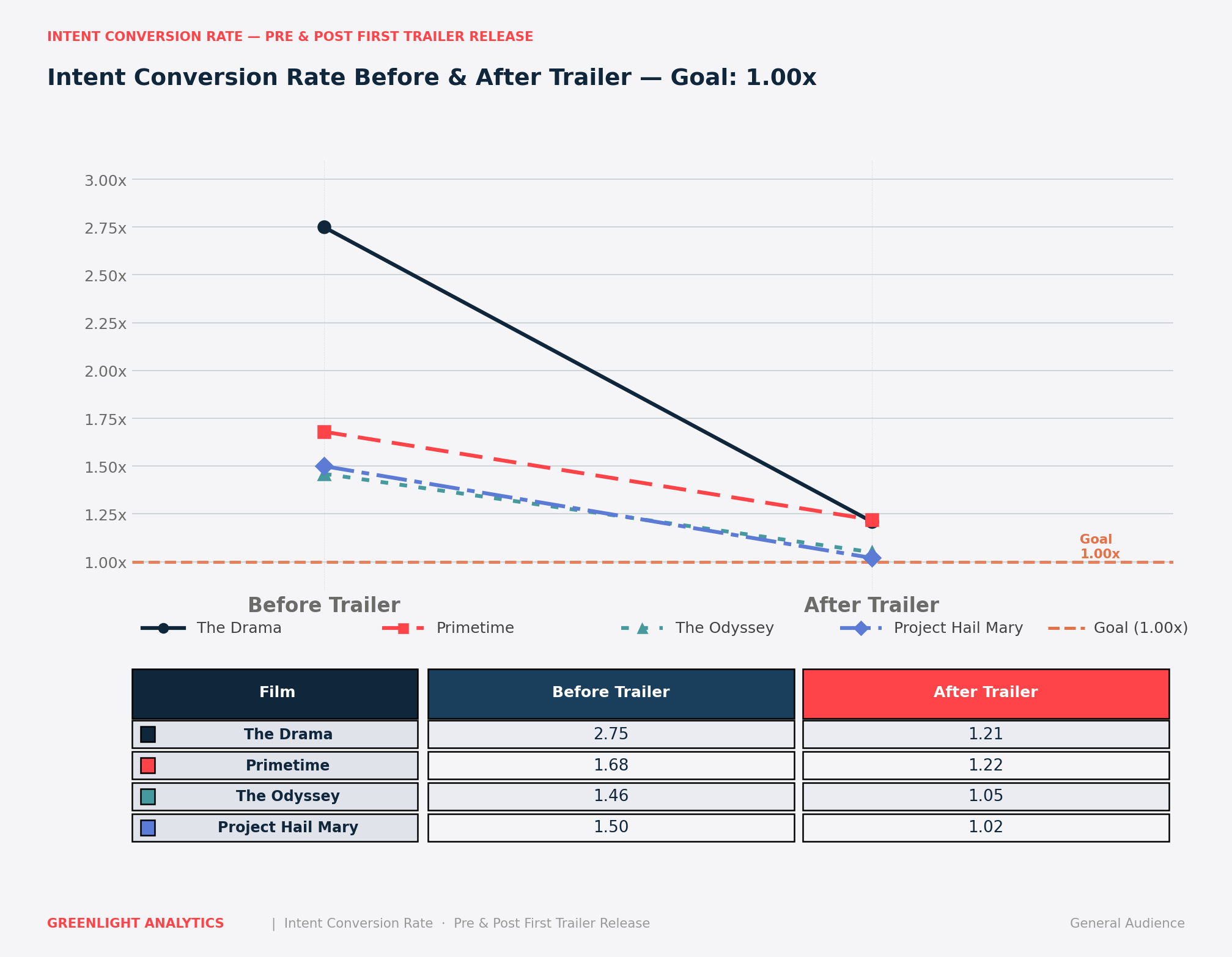
The differentiating factor for these films was not merely any intent growth at all, though that helps. But more specifically, intent growth among aware audiences. Films like The Drama, Primetime, Project Hail Mary, and The Odyssey significantly improved their conversion rates — aware audiences committing to theaters — indicating a more enthusiastic audience base willing to wait months and eager to turnout upon release.
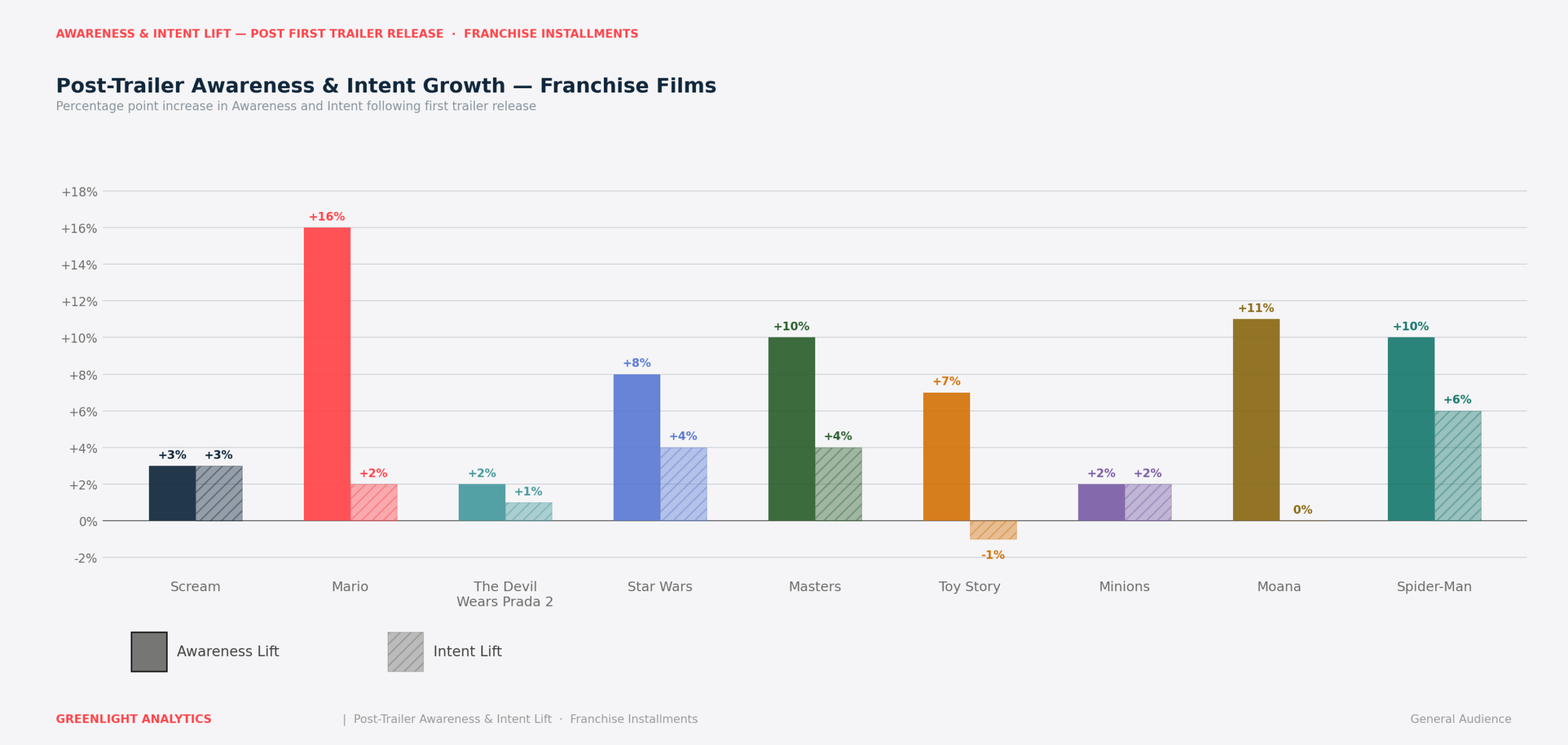
Franchise installments see their fair share of post-trailer bumps as well. Two illustrative examples include Avatar: Fire and Ash, which rode 10% growth in awareness and 7% growth in intent after its first trailer to an $89 million debut and more than $400 million domestic, and the record-breaking Spider-Man: Brand New Day, which saw general public awareness and intent rise to nearly two-thirds.
First Impressions are not Final Impressions
Does a lack of post-trailer growth in either awareness or intent doom a movie’s opening? For an original or new-to-screen film it’s possible. A lack of first movie trailer momentum risks not leaving enough time to create a foundational audience base to build on and turn out. However, the first impressions do not have to be the final impressions.
Films like Obsession ($17 million, $263 million) and Disclosure Day ($44 million, $117 million), after little or negligible growth following their first official trailers, each rallied their target audiences at later points of their marketing campaigns. Obsession saw similar almost double-digit growth in awareness and a moderate growth in intent among the target under-35 audience following its final trailer release, while Disclosure Day saw around 10% growth in awareness and intent among men over 35 in the final week before release alone. Other films like Coyote vs. Acme and Verity likewise saw little traction following their first official trailer releases. But they each steadily built audience bases similar to their target comp films.
Franchises without a post-trailer bump are not necessarily an immediate red flag either. First trailers for new installments like Scream 7 ($64 million, $122 million), The Devil Wears Prada 2 ($77 million, $221 million), and Toy Story 5 ($160 million, $480 million) showed little, if any, subsequent growth among their audience bases. Each highly-anticipated sequel was already at or near their intent peaks before any official promotion even began. This lack of growth did not indicate a lack of interest in the new films but instead that each film had a large and ready audience needing only a reminder to turnout rather than persuasion. Brand recognition and enthusiasm had already carried over.
Even in cases like The Super Mario Galaxy Movie ($132 million, $430 million), where awareness skyrocketed following its announcement and subsequent trailer, its intent barely budged. Rather than indicating a disinterest, however, this post-trailer dynamic showed that this audience was ready for any Mario sequel, with the “galaxy” direction neither persuading nor turning away excited audiences. With significantly high intent already locked in among the general public as well as their target audiences, each of the films’ wins after the first new movie trailer was built around retaining that intent heading into each of their marketing campaigns.
Where the lack of a post-trailer bump becomes a potential issue for a franchise depends on where the intent lies for the specific installment. Star Wars: The Mandalorian and Grogu ($82 million, $178 million) saw significant growth in awareness and moderate subsequent intent growth, but the resulting awareness and intent levels still trailed other $100 million-plus opening films. Mortal Kombat II ($39 million, $80 million) saw immense growth for awareness and intent following its first trailer release prior to its original October 2025 release. This created momentum the movie was never able to recover as it led to a stagnation, albeit with impressive consistency.
Other underperforming franchise entries such as Moana ($43 million, $126 million), Minions & Monsters ($37 million, $183 million), and Masters of the Universe ($29 million, $65 million) saw significant growth in awareness post their first trailers, upwards of 10% or more. But intent for each remained not only relatively stagnant, but also at lower than average rates. Stagnation is not the defining issue, as seen in the previous franchise examples. But stagnation combined with a diminished intent base is the concern to look out for at the start of the marketing campaign.
2026’s Upcoming Movie Trailer Trends
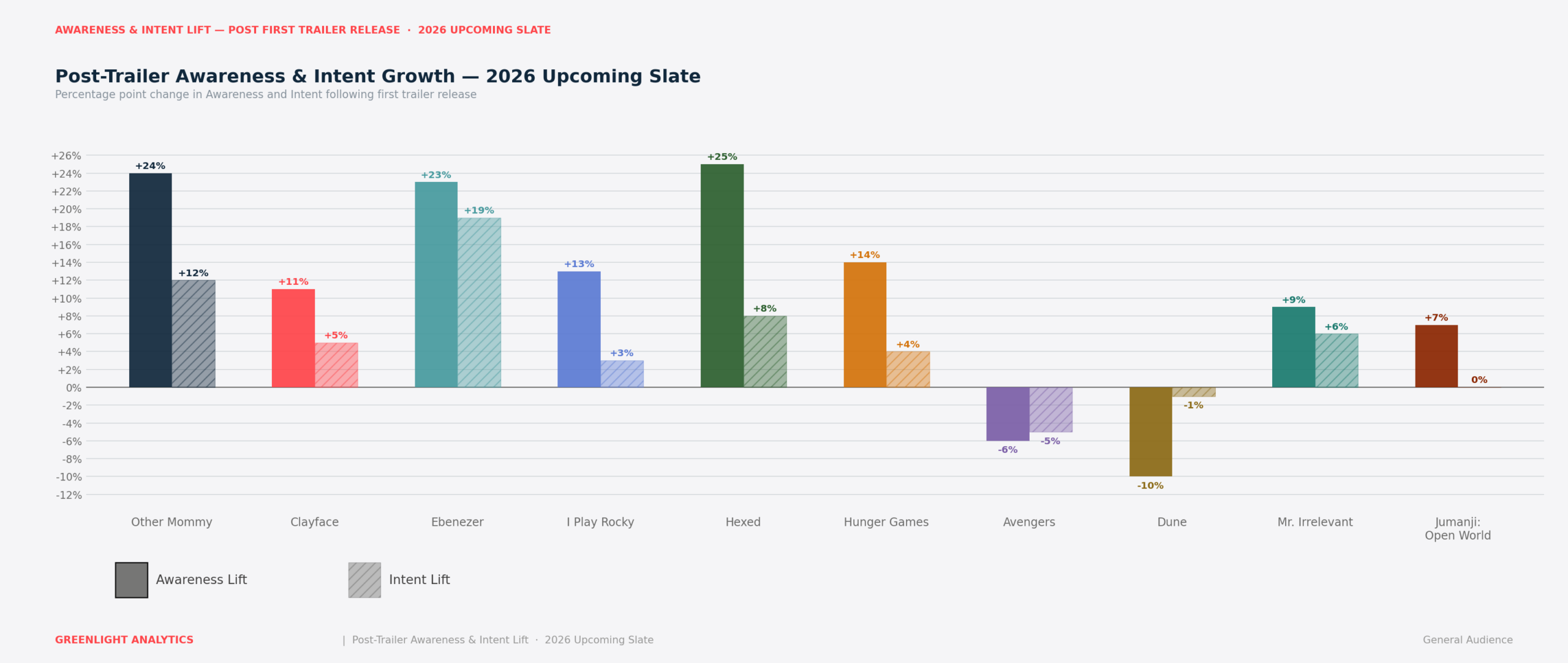
We see similar patterns appear for the rest of 2026’s output. Films like Other Mommy and Ebenezer exploded in both awareness and intent post-trailer with each growing by double digits across both metrics. Ebenezer specifically saw a core audience target emerge in women over 35, who grew 30% in awareness and nearly 20% in intent following the first glimpse of Johnny Depp’s return to the big screen. Other Mommy, on the other hand, made a big impact on all audiences under 35 (especially women under 35) with its intent falling in range of notable horror sequels Black Phone 2 and Smile 2 months before its release.
Hexed and Clayface also saw notable awareness growth paired with moderate intent growth overall. This pairing suggests good potential, but concern for its smaller intent rates for their genres. Films like The Cat in the Hat and How to Rob a Bank saw significant growth following their first trailers before their subsequent release date changes. Both saw significant decreases in metrics before bouncing back to initial post-trailer levels following their second trailers, leaving them right back where they started as their final marketing campaigns begin. I Play Rocky and Mr. Irrelevant both grew in awareness paired with just moderate intent growth for modest metrics overall after their trailers. But they’re growing ever closer to the perfect 1:1 conversion rate between awareness and intent among the general public, which is impressive.
As for notable returning franchises, more patterns of audience responses to first trailers become clear. For Jumanji: Open World, like both Mario and Moana, awareness spiked without noteworthy intent movement, with its already decent intent rates hopefully indicating a fanbase ready for any Jumanji film that only needs to turn out rather than be persuaded. For The Hunger Games: Sunrise on the Reaping, like Avatar, the initial trailer boosted both awareness and intent to levels beyond even the 2023 installment. The anticipated Dunesday match up of Avengers: Doomsday and Dune: Part Three each are remarkably similar with their own franchise patterns. After no movement among the general public following each film’s teaser trailer releases, both films showed significant spikes in awareness following their July trailers to their current peaks in both metrics. Each now follows the patterns of Spider-Man: Brand New Day and The Odyssey before them.
First movie trailer reactions are not the ultimate deciding factor for a film’s success, but they are an important indicator of a film’s potential path. For a hopeful franchise launcher or an original film, ensuring significant initial gains in awareness and intent help to push snowballing momentum for growth leading into its opening week. For tentpoles or continuing franchises, analysis on awareness and intent identifies the audience base the film is working with and whether it needs to focus on turnout or persuasion. For a breakout hit, the growth in intent after the first trailer can be the indicator that the “surprise” breakout may not be a surprise after all. Because a first trailer can mark a decisive turning point in a film’s trajectory, it has arguably earned the event-level status it now holds across the industry. Although the view count matters less than the impact of the view, first trailers still reveal the importance of making a good first impression.